
Written By: Brad Campbell | May 11, 2026
Glass is everywhere in modern hospital design, and for good reason. Natural light, outdoor views, and visual openness have been proven to contribute positively to both patient recovery and staff performance. However, hospital glass also presents several significant risks and vulnerabilities.
In a healthcare environment where impacts, emergencies, and volatile situations are facts of daily life, standard commercial glazing is often inadequate. This is why it’s so important for hospital administrators, facility managers, and architects to consider ways to reinforce hospital glass against impacts.
The presence of natural light in patient care environments has been extensively studied, and the findings consistently show that it offers many benefits.
Patients in rooms with access to daylight report lower pain levels, require less pain medication, experience shorter hospital stays, and show improved sleep quality. Exposure to outdoor views, even a simple sightline to trees or sky, reduces psychological stress and supports faster recovery.
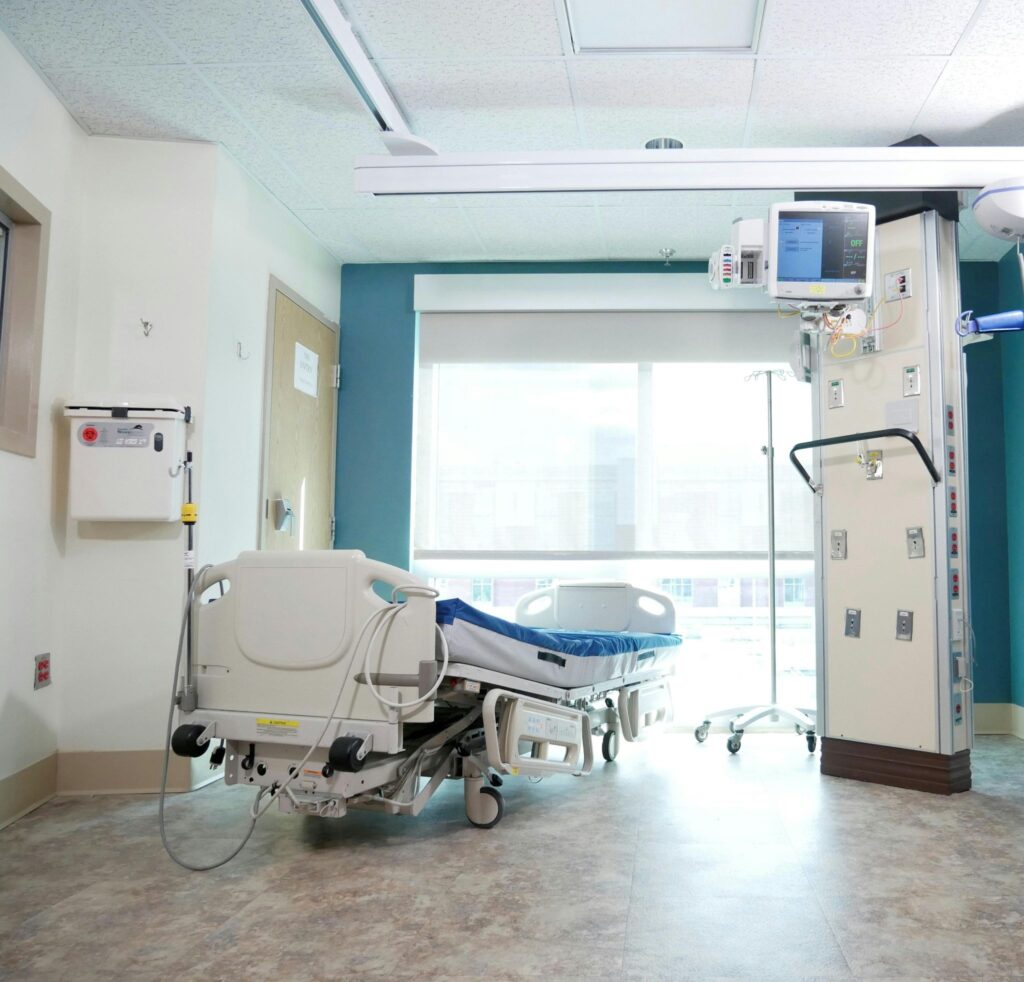
For staff, the benefits are equally significant. Healthcare workers exposed to natural light throughout their shifts report lower fatigue, better mood, and higher job satisfaction. In high-stress work environments where burnout and turnover are persistent problems, plentiful daylight provides measurable benefits.
Hospital glass also supports various operational aspects of healthcare facilities. Transparency between corridors and patient rooms allows staff to monitor patients without entering the room. It also improves facility navigation, reduces the institutional feeling that contributes to patient anxiety, and opens up spaces that would otherwise feel confining.
For these reasons, contemporary hospital design incorporates glass extensively, from floor-to-ceiling patient room windows to glazed partition walls, observation panels, and public-facing service windows.
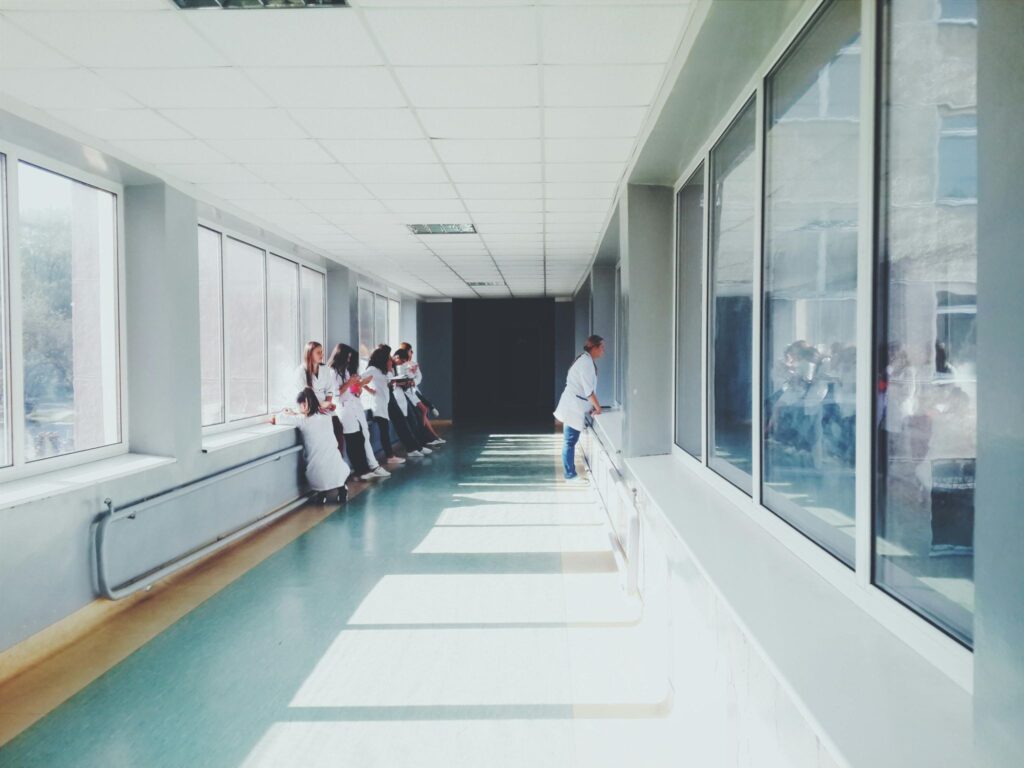
Understanding the vulnerabilities of hospital glazing starts with knowing where glass is used and what it is exposed to in each location:
Standard commercial glass, even tempered safety glass, is not designed to withstand significant levels of impact without breaking. In a hospital environment, that creates several categories of risk.
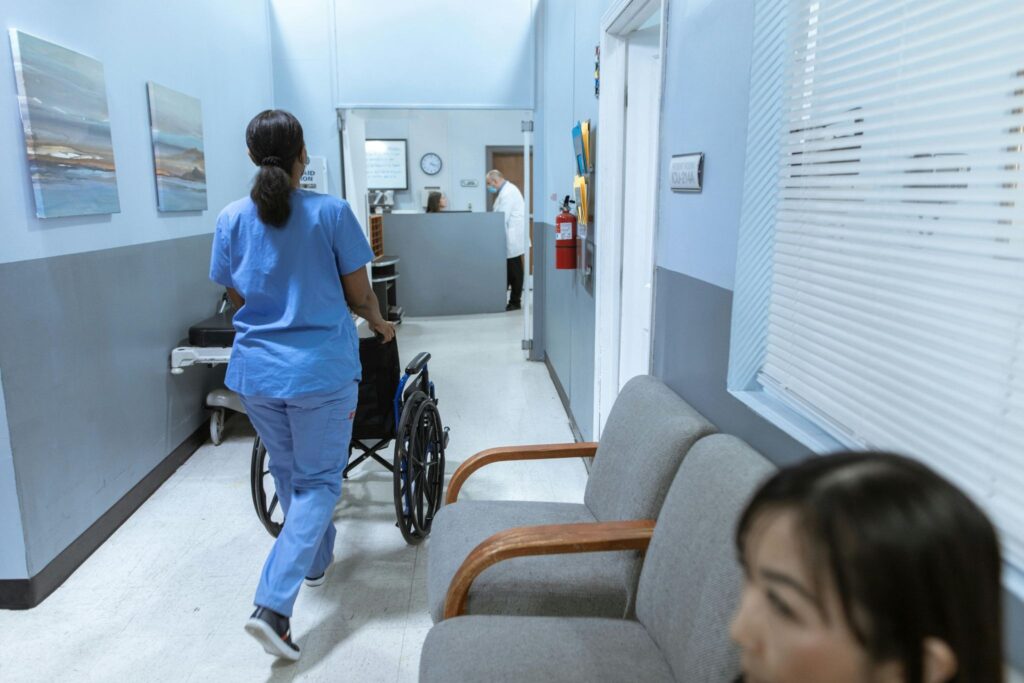
Equipment impacts are routine. Stretchers, supply carts, IV poles, and wheelchairs are moved through corridors and patient rooms constantly. Any of these can potentially strike a glass surface with enough force to cause cracking or full breakage. Any amount of broken glass in a clinical setting is a serious hazard.
Human impacts range from accidental to deliberate. A disoriented patient, an emotionally distressed family member, or an individual in a psychiatric crisis may strike a glass partition or door with considerable force. In emergency intake areas, triage windows, and behavioral health units, this is a serious concern.
Forced entry is another risk for hospitals, which have faced an increase in security incidents over recent years. Exterior glazing, particularly at ground-level entry points, can be a target for individuals attempting unauthorized access (or egress). Standard hospital glass provides minimal resistance and can be breached quickly.
Storm and weather damage is also a threat for facilities in hurricane zones, tornado corridors, or areas prone to high winds and windborne debris. Exterior glazing failure during a storm puts patients, staff, and critical operations at risk simultaneously.
There are several approaches to improving glazing performance in healthcare settings, but the most effective and versatile solution is implementing impact-resistant hospital security glazing.
Security glazing products are engineered to absorb and distribute impact energy rather than fracturing and collapsing. These panels can resist repeated blows from blunt objects, sustained forced entry attempts, and windborne projectiles. Some systems are rated to ballistic resistance standards as well, which may be relevant for facilities that face higher-level security threats.
A major advantage of modern security glazing systems is that they are not limited to new construction. They can be implemented in three ways:
This flexibility makes impact-resistant glazing accessible to facilities at varying stages of construction or renovation, and at a range of budget levels.
Not all hospital glazing carries the same risk level, and facilities working within budget constraints should prioritize accordingly.
Emergency department intake windows, triage areas, and behavioral health unit partitions are the areas where impact-resistant glazing provides the most immediate risk reduction. Staff in these areas face a statistically higher likelihood of encountering aggressive behavior, and the glazing separating them from the public is often their primary physical barrier.
Payment windows, administrative service counters, and pharmacy pickup windows also warrant attention. These are points of public contact where financial stress and wait times can contribute to confrontational behavior.
Exterior glazing at ground-level entry points should be evaluated for both security and weather performance.
Corridors and patient room partitions, while potentially lower in terms of security threat levels, benefit from impact-resistant glazing as protection against the routine equipment and accidental contact that is inevitable in active clinical environments.
Hospitals are complex environments that balance openness, transparency, and access with the need to protect patients, staff, and operations.
Hospital glass is integral to making healthcare spaces functional and therapeutic, but it requires a level of durability that standard glazing does not provide. Impact-resistant security glazing addresses the full range of threats present in healthcare settings, and its compatibility with new construction, replacement, and retrofit applications means that every facility has a viable path to implementation.
Ready to explore healthcare facility security glazing options from Riot Glass? Contact our team today for a free consultation.

HOW CAN WE HELP YOU?