
Written By: Brad Campbell | June 15, 2026
Houses of worship welcome everyone, which is precisely what makes them vulnerable. Open doors, predictable schedules, and a culture of trust can make churches attractive targets for theft, vandalism, and, in the worst cases, targeted violence.
A church safety plan brings structure to how a congregation prepares for and responds to these risks, and physical security measures, including forced-entry or ballistic-grade security glazing, are a foundational part of that structure.
A church safety plan is a documented framework that outlines how a religious facility identifies security risks, prevents incidents, and responds when something goes wrong. It typically covers access control policies, emergency response procedures, communication protocols, staff and volunteer training, and the physical hardening of the building itself.
Keep in mind that the goal of a church safety plan isn't to turn a church into a fortress, but rather to create layered protections that reduce risk while keeping the environment welcoming.
Just like other commercial and public facilities, churches face a broad range of security threats. Understanding them is the first step towards improving safety and security in churches. Here are the main threats any church safety plan should take into account:
Break-ins, burglary, and forced entry are the most common threats churches deal with. Religious properties are frequent targets for opportunistic theft. AV equipment, musical instruments, donation funds, and computers are all attractive to would-be intruders. Standard commercial glass on doors and windows offers minimal resistance; a determined burglar can breach it in seconds.
Vandalism is another persistent issue, ranging from graffiti on exterior glass to deliberate window smashing. Historic or architecturally significant churches are often targeted specifically because of their visibility.
Active threat scenarios, including targeted violent attacks, are a worst-case scenario nobody wants to have to prepare for, but they can happen anywhere. Mass casualty events at houses of worship have occurred with enough frequency in recent years that the Department of Homeland Security has published specific guidance for faith communities.
Churches, by nature, gather large numbers of people in a single space on predictable schedules, which can make them targets. Planning for this possibility isn't fearmongering. It's responsible stewardship of the people in your care.
A complete church safety plan should address all three threat categories, with physical security measures designed to deter, slow, or stop each type of threat.
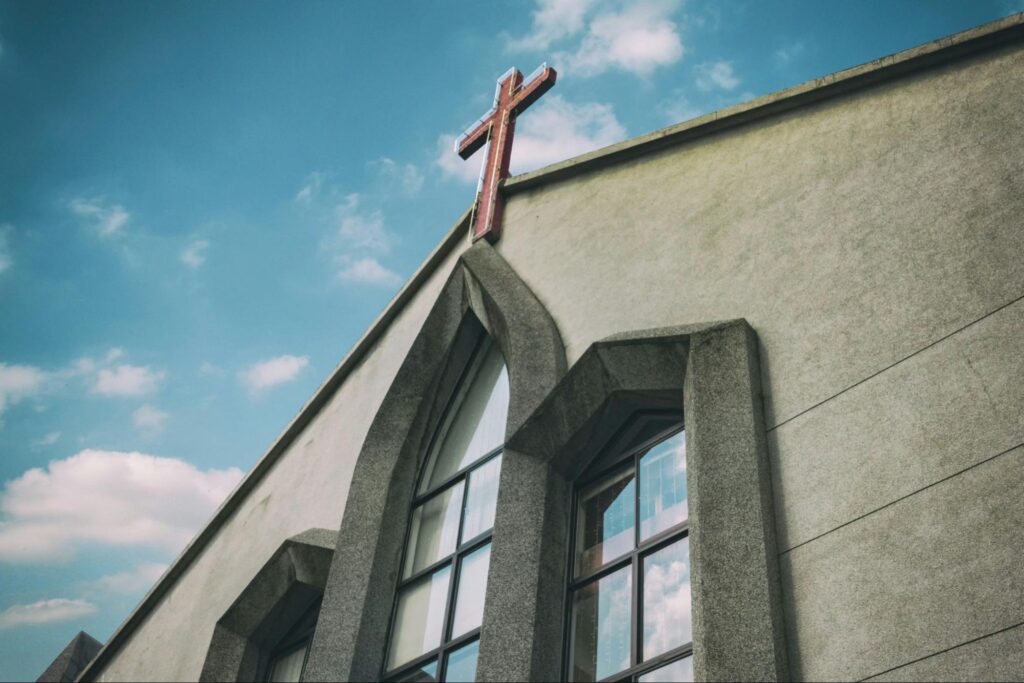
Policies and training matter, but physical security forms the hard layer between a threat and the people inside. Windows and glass entryway doors are consistently the weakest points in any building's envelope, and churches often have a lot of them.
Riot Glass manufactures security glazing retrofit systems designed specifically to address this vulnerability. Our products are used across a range of high-risk environments and directly address the types of threats churches face.
Riot Glass forced-entry-resistant glazing products replace or reinforce existing glass with laminated security glazing that holds together under repeated impacts.
Unlike standard glass that shatters immediately on impact, forced-entry-resistant glazing is engineered to stay in place even when cracked, dramatically increasing the time and effort required to breach a window or door. For a burglar relying on speed and silence, that resistance is often enough to make them abandon the attempt entirely.
For churches concerned about more severe scenarios, Riot Glass also offers bullet-resistant glazing options rated to UL 752 ballistic standards.
These products can be specified for entry doors, vestibule glass, and windows facing public areas, providing a layer of ballistic-grade glass protection in active threat scenarios without requiring the church to install highly visible security infrastructure that drastically changes the character of the space.
One of the biggest advantages of Riot Glass products is that they are fully retrofittable, meaning existing window frames and door frames stay in place. There's no need for major construction or renovation work. The security glazing is installed directly into or over current framing, keeping disruption minimal and costs controlled.
This also means the visual character of the church is preserved. Riot Glass security glazing is optically clear and available in configurations that match the look of existing glass. A church will know the upgrade happened; a visitor won't. That matters for churches that have spent decades or generations building an aesthetic that reflects their community and values.
Historic churches present a unique challenge when it comes to physical hardening. Stained glass, custom-fabricated frames, and heritage masonry aren't compatible with standard security retrofits that require drilling, fastening, or structural modification.
Riot Glass addresses this directly with the J-Series compression-fit sub-framing system, which holds security glazing in place using compression rather than permanent fasteners. Nothing is drilled into the surrounding structure, and no existing materials are altered or damaged.
For churches on historic registries or with architecturally sensitive construction, the J-Series makes it possible to achieve meaningful security improvements without any compromise to the building's integrity.
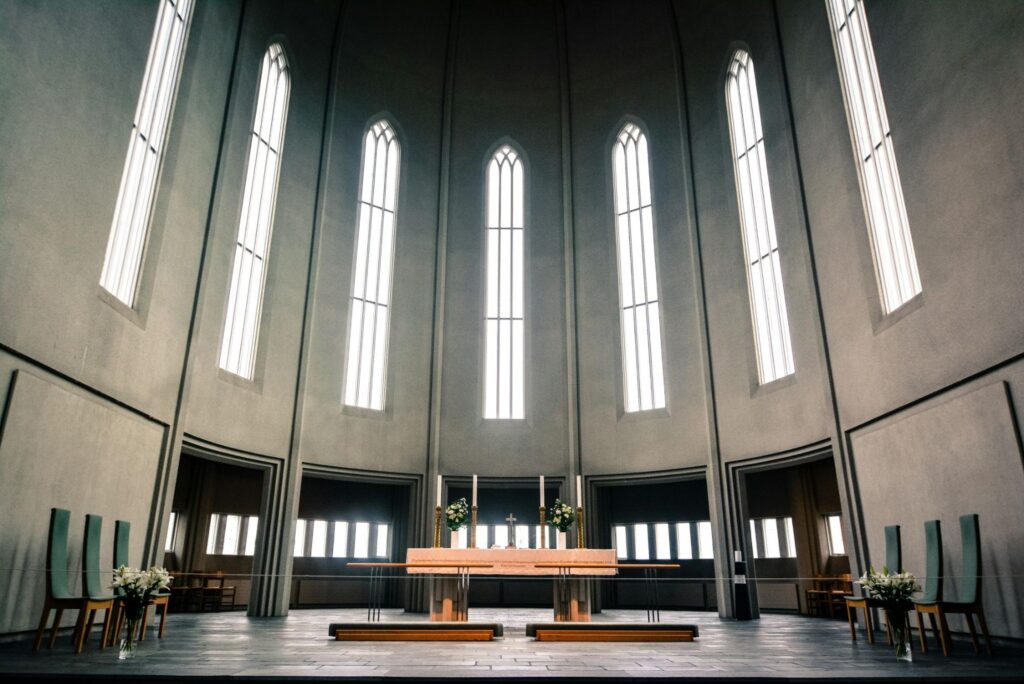
Security glazing also provides an always-there defense against lower-level threats. Riot Glass products resist the kind of impact and abrasion that leads to cracked or shattered panes from thrown objects, weather events, or accidental impacts. For churches managing tight maintenance budgets, reducing the frequency of glass replacement is a real operational benefit.
Whether a church has 80 seats or 800, the same product lines scale to fit. Smaller congregations can prioritize the most vulnerable entry points; larger campuses can implement a phased approach across multiple buildings and access zones.
A church safety plan should cover access control, emergency response procedures, communication protocols, staff and volunteer training, and physical security hardening. Glass doors and windows are typically the first priority for physical upgrades, as they represent the most common breach points.
Yes. Riot Glass products are designed as retrofit solutions that work within existing framing. Installation doesn't require structural renovation, making it practical and cost-effective for churches of any size and budget.
It depends on the facility’s threat assessment and location. Forced-entry-resistant glazing addresses the most common threats, including after-hours break-ins and burglary, and offers access denial in active threat scenarios. Bullet-resistant options are available for churches that want a higher level of protection for high-visibility entry points.
Riot Glass security glazing is optically clear and designed to blend with existing installations. From the outside, upgraded windows are virtually indistinguishable from standard glass.
The J-Series is a compression-fit sub-framing system that holds security glazing in place without drilling or fastening into the surrounding structure. It's the preferred solution for churches with heritage architecture where preserving the original framing and masonry is a requirement.
Every congregation deserves to feel safe. If you're ready to strengthen your church's physical security, Riot Glass offers retrofit security glazing solutions for churches of every size and architectural style. Contact us today to discuss your needs and get a free consultation.

HOW CAN WE HELP YOU?