
Written By: Brad Campbell | July 22, 2026
Youth camps and outdoor education centers serve a population that requires an especially high standard of care: children.
Whether the facility hosts summer day camps, overnight programs, or school group visits, the responsibility to protect young people from external threats extends well beyond supervision and programming. It includes the physical environment itself.
These facilities face a distinct set of security challenges. Much of the activity at a camp or outdoor education center happens in open, natural spaces that are difficult to monitor with traditional security infrastructure. Buildings may be spread across large properties with multiple access roads.
Additionally, off-season closures leave facilities unoccupied for months at a time, creating extended windows of vulnerability to theft or vandalism.
This guide covers practical forced entry protection measures for youth camps and outdoor education centers, addressing both the outdoor environment and the permanent structures on the grounds.
The foundation of security at any camp or outdoor education center is a well-defined, secure perimeter. Without one, there is no meaningful distinction between the facility's protected space and the surrounding land, making controlling access nearly impossible.
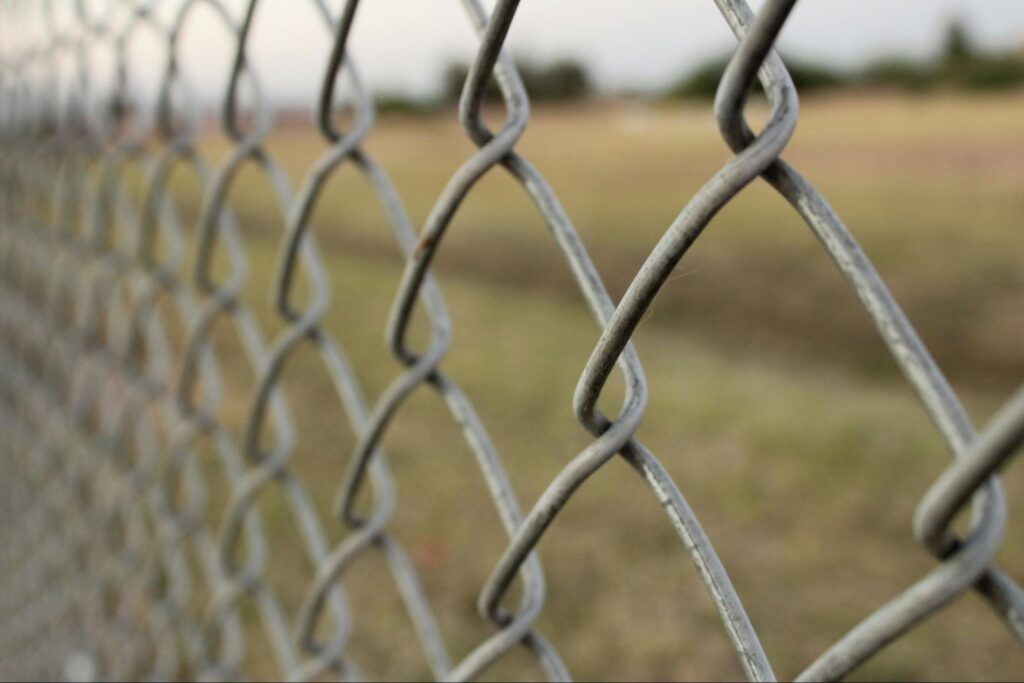
Perimeter fencing appropriate for these environments should:
Natural features like dense vegetation, water, or rock formations can supplement fencing in some areas but should never be relied on as a substitute. A perimeter is only as strong as its weakest point.
A secure perimeter is also only effective if access through it is carefully controlled. Youth camps and outdoor education centers typically have a main vehicle entrance and one or more pedestrian entry points, all of which need active management during operating hours.
Key camp entry point security measures include:
During program hours, no one should be able to walk onto the grounds without being acknowledged and verified by staff. This is particularly important at outdoor education centers that may receive school groups from multiple institutions in the same week, creating a higher volume of unfamiliar adults on the property.
Open outdoor environments present security challenges that enclosed facilities do not. Activity areas, trails, waterfront zones, and campsites may be spread across dozens of acres, making comprehensive surveillance impractical.
A few strategies help close the gap:
No youth camp or outdoor education center security system can eliminate all risk in such an open environment, but layering physical boundaries, lighting, surveillance, and staff positioning significantly reduces it.
While much of camp life happens outdoors, most facilities of this type also include permanent buildings for dedicated purposes, including dining halls, administrative offices, nurse stations, storage buildings, and overnight cabins. These buildings all require the same level of forced entry consideration as any commercial facility.
Standard glass in doors and windows is one of the most common vulnerabilities in these structures. It can be breached quickly, providing access to buildings and the valuables or occupants within.
Security glazing replaces or reinforces standard glass with materials engineered to resist blunt-force impact and forced entry attempts. For camp and outdoor education facilities, security glazing is particularly well-suited to:
Riot Glass offers security glazing solutions that retrofit into existing window and door frames, making them ideal for camp facilities that often operate with tight budgets and cannot undertake major structural renovation. The glazing upgrades the forced entry resistance of existing openings without requiring a full replacement of doors or window frames.
One of the most significant security vulnerabilities at youth camps and outdoor education centers is the off-season. Many of these facilities operate only during warmer months, leaving buildings unoccupied and equipment and supplies unmonitored for weeks or months at a time.
That extended vacancy makes them attractive targets for trespassing, vandalism, break-ins, and theft. Roll-down security shutters provide extra protection for buildings during these closure periods. When deployed over doors and windows, they:
When used alongside security glazing, shutters form a two-layer hardening system. The glazing provides year-round forced entry resistance during operating periods, while the shutters add a second protective layer during off-season closures when no staff are present to respond to incidents.
For facilities that store high-value items like canoes, athletic equipment, audio-visual gear, or power tools in on-site buildings over the winter, this combination of barriers significantly reduces the risk of theft.
Beyond perimeter security, entry control, security glazing, and shutters, a few additional measures round out a comprehensive forced entry protection plan for camp and outdoor education facilities:
Youth camps and outdoor education centers carry an obligation to protect the young people in their care that extends to every corner of the physical environment. Forced entry protection is also necessary to prevent theft and ensure smooth operations.
A layered approach to forced entry protection for youth camps and outdoor education centers, combining perimeter fencing, controlled entry, building hardening with security glazing, and off-season shutter protection, addresses the full range of vulnerabilities these facilities face. Each layer supports the others, and together they create an environment where staff can focus on programming and young people can learn and grow without unnecessary risk.

HOW CAN WE HELP YOU?