
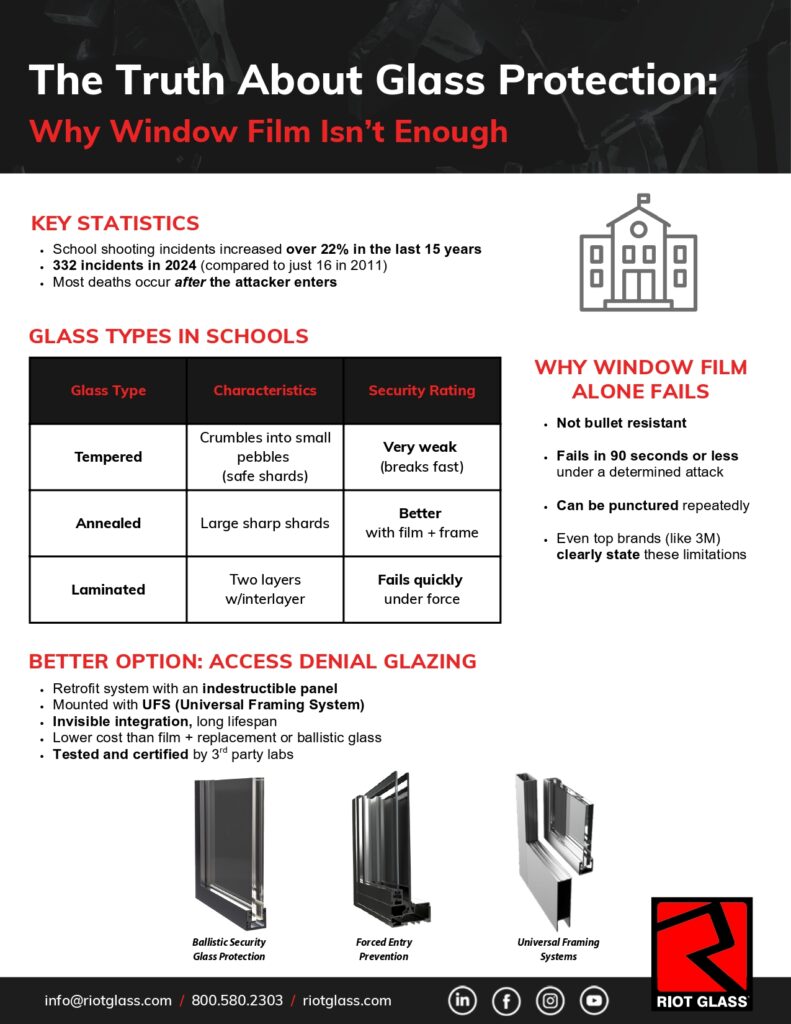
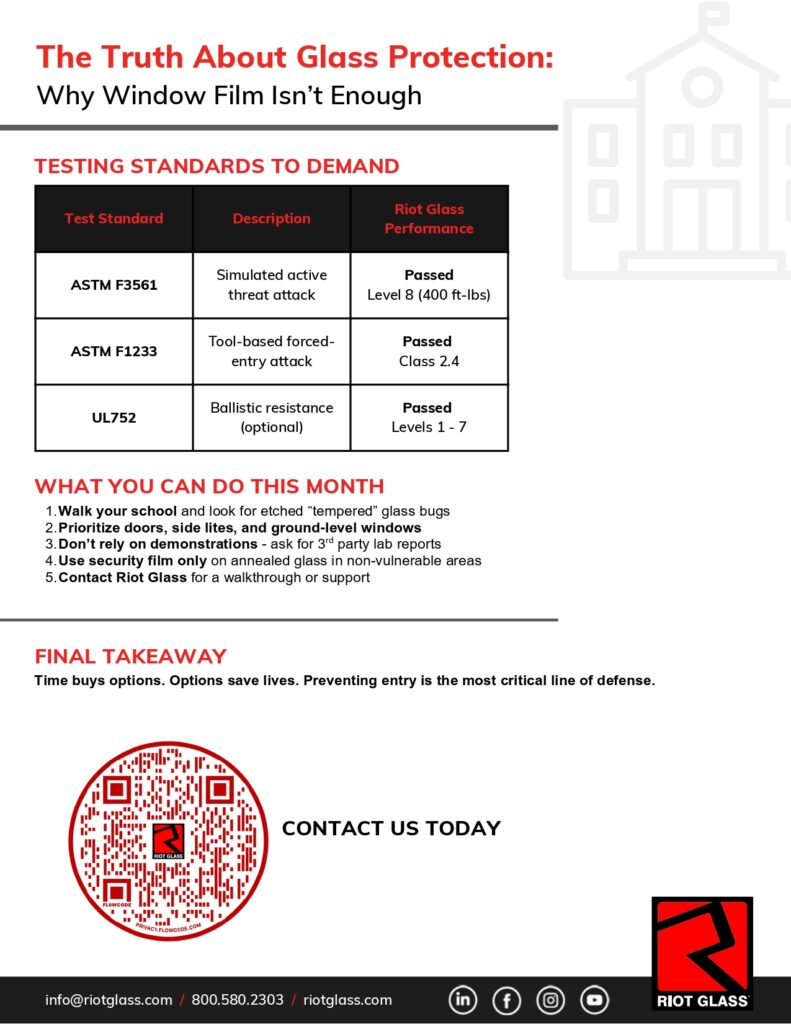
Tempered glass, also referred to as tempered safety glass, is a type of safety glazing that has been heat-treated to be significantly stronger than standard annealed glass. When it does break, it shatters into small, rounded pebbles rather than large, jagged shards, dramatically reducing the risk of serious injury.
Because of this property, building codes in the United States and internationally mandate the use of tempered safety glass in locations where people are most likely to come into contact with glass or potentially be harmed by broken fragments.
Tempered glass is most commonly required in commercial buildings, but residential codes also call for it in a range of specific locations, particularly in larger homes with expansive glazing. Understanding exactly where and when tempered glass is required by code helps builders, property owners, and facility managers stay compliant and protect building occupants.

Several overlapping code frameworks govern the use of tempered safety glass in the United States:
The IBC and IRC identify several categories of "hazardous locations" where safety glazing, most often tempered glass, is required. These are places where accidental human impact is most likely, or where broken glass poses a heightened danger.
All glazing in fixed and operable panels of swinging, sliding, and bifold doors is considered a hazardous location. This applies broadly to commercial and residential entryways, patio doors, and interior doors with glass panels. Limited exceptions exist for small openings through which a 3-inch sphere cannot pass, and for certain decorative glass.
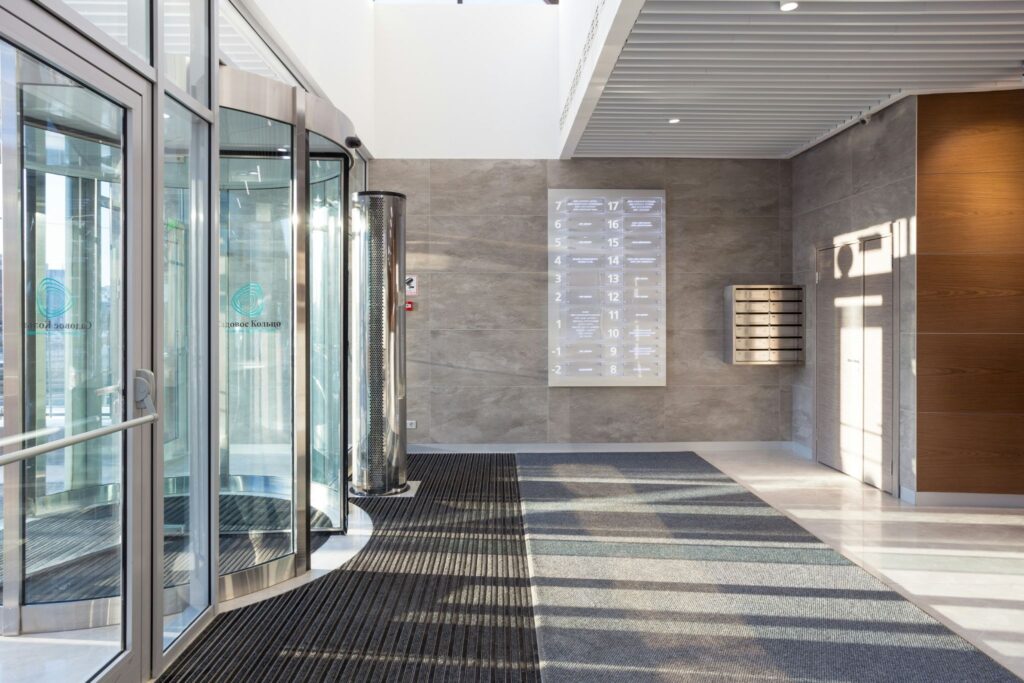
Glass panels located within 24 inches of either side of a closed door, with a bottom edge less than 60 inches above the floor, must be tempered. This frequently affects sidelights, or the narrow glass panels flanking entry doors. A permanent barrier, such as a wall between the door and glazing, may exempt the panel from this requirement.
Windows larger than 9 square feet with a bottom edge less than 18 inches above the floor and within 36 inches of a walking surface require safety glazing. This provision commonly applies to floor-to-ceiling windows, large picture windows, and low-profile glazing in both luxury residential and commercial properties.
Glazing in areas containing hot tubs, spas, whirlpools, saunas, steam rooms, bathtubs, showers, and swimming pools requires tempered glass when the bottom edge is less than 60 inches above the walking surface or within 60 inches horizontally of the water's edge. This covers areas like residential bathrooms, hotel spas, gym locker rooms, and aquatic facilities.
Glazing used in railing systems, such as glass infill panels for balusters and banisters, must meet safety glazing requirements due to the high likelihood of human impact. Glass balcony railings and frameless glass staircase guards are typical examples.

Glass near stairways and ramps where the bottom edge is less than 60 inches above the walking surface is considered a hazardous location. Codes also require safety glazing within 60 inches horizontally and vertically of stairway landings.
Single-layer tempered glass is only acceptable in overhead glazing applications where there is no walking surface below, or where that surface is permanently protected from falling glass. Laminated safety glass is typically the preferred, and often required, product for skylights and overhead installations where occupants are present underneath.
It’s also worth noting that the 2024 IBC introduced important clarifications around multipane assemblies: every individual pane in a multipane unit must now be safety glazing when the assembly is in a hazardous location, with limited exceptions for outboard panes installed more than 8 feet above grade or a walking surface.
No. While tempered glass is stronger than standard annealed glass, it can still shatter easily when struck by windborne debris traveling at high velocity. A single piece of debris carried by hurricane-force winds is often sufficient to break a tempered glass panel entirely. Accordingly, building codes in hurricane-prone regions do not accept tempered glass as a substitute for impact-resistant glazing.
Miami-Dade County, for example, one of the most stringent jurisdictions in the country, requires hurricane-missile-tested, impact-resistant windows and doors for all new construction. These products undergo rigorous large- and small-missile impact testing that tempered glass cannot pass on its own.

No. Tempered glass is not a security glazing product. A sufficiently forceful or precisely placed blow can cause a tempered glass panel to crumble nearly instantaneously, providing quick and easy access to a property.
For businesses or property owners concerned about forced entry, burglary, or smash-and-grab incidents, tempered glass alone is inadequate. Effective forced-entry resistance requires either purpose-built security glazing rated to recognized forced-entry standards or roll-down security shutters that lock into place over vulnerable glazing.
Yes. Laminated safety glass and polycarbonate-based security glazing can satisfy many of the same building code requirements as tempered glass, and often go considerably further.
Laminated glass holds together when broken due to an interlayer bonding the panes, preventing shattering and maintaining a barrier even after impact. This makes it suitable for overhead glazing, hurricane zones, and forced-entry-resistant applications where tempered glass falls short. Polycarbonate security glazing systems offer even greater impact resistance and are used in high-security commercial and institutional settings.
A laminated or polycarbonate-based glazing product may satisfy both the safety glazing requirements of the IBC and additional requirements for storm resistance or forced entry resistance simultaneously, which is something tempered glass cannot achieve.
Responsibility is typically shared across the project team. Architects and designers specify glazing requirements in construction documents. Contractors and glazing subcontractors are responsible for installing the correct product. Building inspectors verify compliance during inspections.
Property owners bear ultimate accountability for maintaining a code-compliant building. When in doubt, consulting a licensed glazing professional or your local building department before specifying or installing glass is always advisable.
Tempered glass plays an important role in building safety, and understanding where and when tempered glass is required by code is essential for any construction or renovation project.
For property owners and facility managers who need protection beyond what tempered glass can offer, whether against storm damage, forced entry, or both, it’s worth exploring advanced glazing options that can satisfy multiple requirements at once.
Riot Glass specializes in security glazing solutions designed to go well beyond minimum human safety requirements. Contact our team today to discuss the right glazing strategy for your property.
When it comes to security risks, pharmacies inhabit a unique space somewhere in between the healthcare and retail sectors. They stock controlled substances, prescription medications, and over-the-counter products that have both street value and medical demand, making them frequent targets for forced entry, burglary, smash-and-grab theft, and even armed robbery.
For independent pharmacies, hospital pharmacies, or pharmacy chains, security isn’t built on one measure alone. Effective pharmacy security is the result of layering multiple systems and products so that any attempt at forced entry or theft encounters compounding resistance.
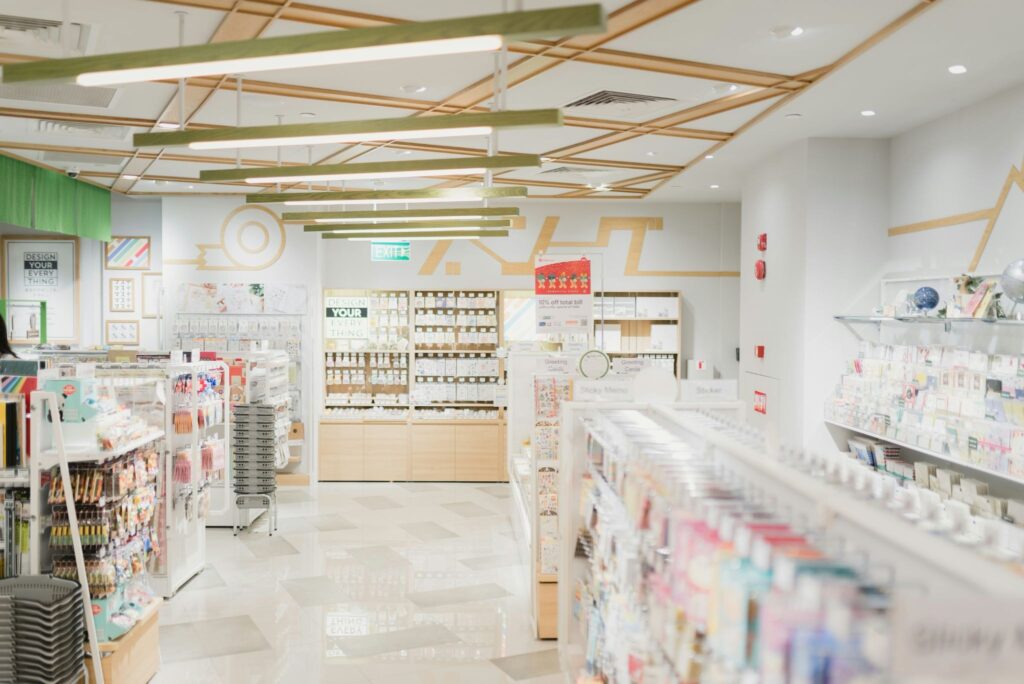
Theft is the biggest security threat to most pharmacies, and it can take several forms:
A layered pharmacy security strategy accounts for all of these.
After-hours burglary is among the most common threats to pharmacy security. Perpetrators target pharmacies when staff are absent, using tools or blunt force to breach doors, windows, or counters and access medication storage, cash drawers, or safes. Preventing pharmacy burglary requires physical barriers that stop forced entry in the first place.
Smash-and-grab theft is a faster, more opportunistic form of burglary. Rather than attempting a quiet, methodical break-in, perpetrators use blunt objects or even vehicles to shatter glass facades, display cases, or interior barriers and grab whatever is quickly accessible. Speed is the defining feature of this threat, so the more layers that slow down criminals, the less of a threat smash-and-grabs or crash-and-grabs are to a pharmacy’s security.
Daytime robbery presents a different risk profile. These incidents occur during business hours, often involving individuals who enter the pharmacy as customers before making demands of staff. In pharmacies with open counter layouts, staff have minimal physical separation from the public and limited options for protection in the face of a potentially violent robbery.
Glass is consistently the weakest point in a pharmacy's physical perimeter. Standard tempered or laminated glass used in storefront windows, interior transaction counters, and display cases can be breached quickly with minimal equipment.
In a smash-and-grab, standard commercial glass is essentially no obstacle. In an after-hours burglary, it’s often the first and only barrier between an intruder and the pharmacy interior. In a daytime robbery scenario, an open or lightly constructed counter offers staff no meaningful protection. Impact-resistant security glazing addresses all three of these threat scenarios directly.
Pharmacy security glazing is engineered to absorb and distribute impact force rather than fracturing on contact. When struck repeatedly with blunt objects, it resists breaching, holding together even when the surface is cracked or damaged.
Beyond stopping a forced entry attempt outright, security glazing’s value also comes from buying time. In a smash-and-grab, a delay of even 30 to 60 seconds is typically enough to cause an attempt to be abandoned. In a burglary attempt, sustained resistance against forced entry means an alarm-activated security or law enforcement response has time to materialize before access is achieved.
For pharmacy storefronts, replacing or retrofitting standard glass with forced-entry-resistant security glazing is among the most cost-effective physical security investments available. It directly eliminates the vulnerabilities that make burglary and smash-and-grab theft viable.
A perpetrator who expects to breach a storefront window in seconds and encounters security glazing that holds under repeated strikes is far more likely to abandon the attempt than to continue.
Pharmacy security glazing is not limited to exterior applications. Inside the pharmacy, it can be used to create secure transaction windows that physically separate staff from the public while allowing normal service to continue.
These windows can be built with pass-through compartments for prescriptions, medications, payment, and documents, maintaining full operational functionality without requiring staff to be in open contact with customers.
In a daytime robbery scenario, a secure pharmacy transaction window provides a critical barrier. Rather than a counter that can be vaulted or a weak barrier that can be breached with a single strike, staff are behind a forced-entry-rated barrier that resists breakage and buys time for alarm activation and emergency response.
One of the biggest advantages of modern security glazing systems, especially Riot Glass solutions, is that implementation is not limited to new construction. Pharmacies can integrate security glazing at any stage:
Security glazing does a lot to physically harden a pharmacy against forced entry and theft, but it works best in combination with supporting measures.
A monitored alarm system covering all entry points and interior motion zones is essential. Alarms do not stop a breach, but when combined with physical barriers that slow or prevent entry, they substantially reduce the window in which a perpetrator can operate undetected. Monitored systems that dispatch a response rather than sounding a local alert only are significantly more effective in practice.
Visible cameras deter opportunistic attempts and provide documentation for law enforcement and insurance purposes. Coverage should include all entry points, the sales floor, the pharmacy counter, and medication storage areas. High-resolution systems with reliable low-light performance are worth the investment given the evidentiary value of clear footage.
Electronic access control restricts entry to the pharmaceutical dispensary and storage areas to authorized personnel and creates a documented record of access events. These systems limit the reach of an intruder who does achieve entry and are a key tool for both managing theft risk and demonstrating regulatory compliance for controlled substance storage.
Motion-activated lighting at all entry points, parking areas, and building blind spots removes the concealment that after-hours burglars rely on and increases the probability of detection before a forced entry attempt progresses.
Physical and electronic systems require consistent operational support. Controlled substance inventory should be audited on a defined schedule, with discrepancies investigated promptly. Opening and closing procedures should include protocols for identifying signs of tampering or overnight breach before staff enter. Staff should be trained on robbery response protocols, including alarm activation and non-resistance procedures.
The value of a layered approach to pharmacy security is that each component complements the others, making up for their limitations. Alarms without physical barriers give perpetrators time to act before a response arrives. Cameras without barriers document losses but do not prevent them. Physical barriers without monitoring leave gaps that a persistent bad actor will eventually find.
Security glazing plays a central role in this approach because it addresses the most consistent and exploitable vulnerability in pharmacy physical security: glass. Storefront glazing, transaction windows, and interior barriers built with impact-resistant security glazing protect against the most common threat scenarios that a pharmacy faces, from opportunistic smash-and-grabs to determined after-hours burglaries to daytime robbery attempts targeting staff directly.
For pharmacies evaluating upgrades to their current security measures, the physical perimeter is the right starting point, and glass is almost always where the most critical gaps are found.
Ready to explore security glazing options for pharmacies from Riot Glass? Contact our team for a free consultation.
When a hurricane or strong windstorm hits, one of the most dangerous threats to a building isn’t the wind alone. It’s the debris carried by that wind.
Broken tree limbs, gravel, signage, and structural fragments can turn into high-speed projectiles capable of shattering unprotected windows, glass doors, and other vulnerable glazed surfaces. This can quickly breach a building’s envelope, exposing it to further damage from internal wind pressure and heavy rains, not to mention putting any occupants at serious risk of harm.
ASTM E1996 is a windborne debris impact performance standard that defines how glazing should be tested against exactly this type of threat. Understanding exactly what it is, how it works, and what it does (and doesn’t) measure is important when it comes to evaluating certain impact-resistant window, door, and curtain wall systems.
ASTM E1996 is a standard specification published by ASTM International, officially titled Standard Specification for Performance of Exterior Windows, Curtain Walls, Doors, and Impact Protective Systems Impacted by Windborne Debris in Hurricanes. The most current version is ASTM E1996-20, published in 2020.
The standard is one of several that emerged in response to widespread glazing failures observed after major hurricane events, particularly in the wake of Hurricane Andrew in 1992. Researchers and engineers recognized that wind pressure alone didn't fully explain the destruction; flying debris was punching through windows and allowing catastrophic pressure differentials to build inside structures, contributing to roof failures and, in severe cases, complete building collapse.
ASTM E1996 defines minimum performance criteria for exterior glazing systems, including windows, skylights, curtain walls, storefronts, and doors, as well as retrofit protective systems like security glazing applied over existing glass. The standard applies primarily to buildings in hurricane-prone regions as defined by ASCE 7 wind speed maps, though its relevance extends to any structure where windborne debris resistance is a design consideration.

As a specification standard that defines windborne debris impact performance requirements and the test methods used to determine whether a product meets them, ASTM E1996 does not evaluate ballistic resistance, forced entry resistance, blast resistance, or seismic performance. Each of those threats has its own dedicated standard.
What ASTM E1996 does measure is whether a glazing system can withstand the impact of windborne debris under conditions representative of a major hurricane, and whether it remains structurally intact and weather-resistant after that impact.
The standard works in conjunction with ASTM E1886, which is the test method standard that defines the procedures laboratories follow when conducting the physical evaluation of materials. Think of E1996 as the rulebook and E1886 as the step-by-step instructions. Products are typically described as meeting ASTM E1996 criteria when they have been evaluated using the E1886 test method.
It's also worth noting that ASTM E1996 does not address installation. A glazing product can perform well in laboratory testing and still fail in the field if it isn't properly installed into the framing system. System-level performance and installation per manufacturer specifications are both critical to real-world outcomes.
The centerpiece of ASTM E1996 is the missile impact testing. The standard defines two primary missile types to test:
After the missile impact testing phase, surviving specimens undergo cyclic pressure loading, which consists of a series of positive and negative air pressure pulses that replicate the dynamic wind loads a building envelope experiences during a storm. This portion of the test evaluates whether the system maintains structural integrity and weather resistance even after sustaining a direct hit.
To meet ASTM E1996 criteria, a glazing system must pass both phases: withstanding the missile strike without dangerous penetration, and surviving the subsequent pressure cycling without catastrophic failure or water infiltration.
The standard covers exterior windows, sliding glass doors, swinging doors, skylights, curtain wall assemblies, storefronts, and other glazing systems, including retrofit security glazing solutions. Any exterior glazing element exposed to windborne debris during a hurricane falls within scope.
In many hurricane-prone jurisdictions, impact resistance testing in accordance with ASTM E1996 (using the ASTM E1886 test method) is referenced directly in the local building code. Florida, Texas, and other Gulf and Atlantic Coast states have adopted provisions requiring glazing in certain wind zones to meet these performance criteria. Always consult the applicable local code for specific requirements.
Miami-Dade County maintains one of the most stringent impact-resistant glazing approval programs in the country. Products receiving a Miami-Dade Notice of Acceptance (NOA) have been evaluated by the county's product control division, which uses ASTM E1886/E1996 as part of its protocol but adds further requirements on top. An NOA is a county-level product approval; ASTM E1996 is the underlying national standard that feeds into it.
No. Windborne debris impact resistance and forced entry resistance are distinct performance characteristics governed by separate standards. A glazing system designed and tested for windborne debris impact may offer some incidental resistance to forced entry, but the two are evaluated differently. Products intended to resist forced entry are typically evaluated under different ASTM standards specific to that threat, such as F3038.