
Written By: Brad Campbell | February 24, 2026
When it comes to securing commercial properties against forced entry, burglary, smash-and-grab theft, rioting and looting, and active threats, there’s one key part of the building envelope you can’t ignore: windows.
Traditional commercial window glass, whether tempered or annealed, can shatter in seconds, leaving your property exposed to theft or, in a worst-case active threat scenario, exposing occupants to harm.
However, with the right type of security glass windows, you can greatly reduce these risks, securing a building against a full range of threats to protect your people, property, and assets 24/7.
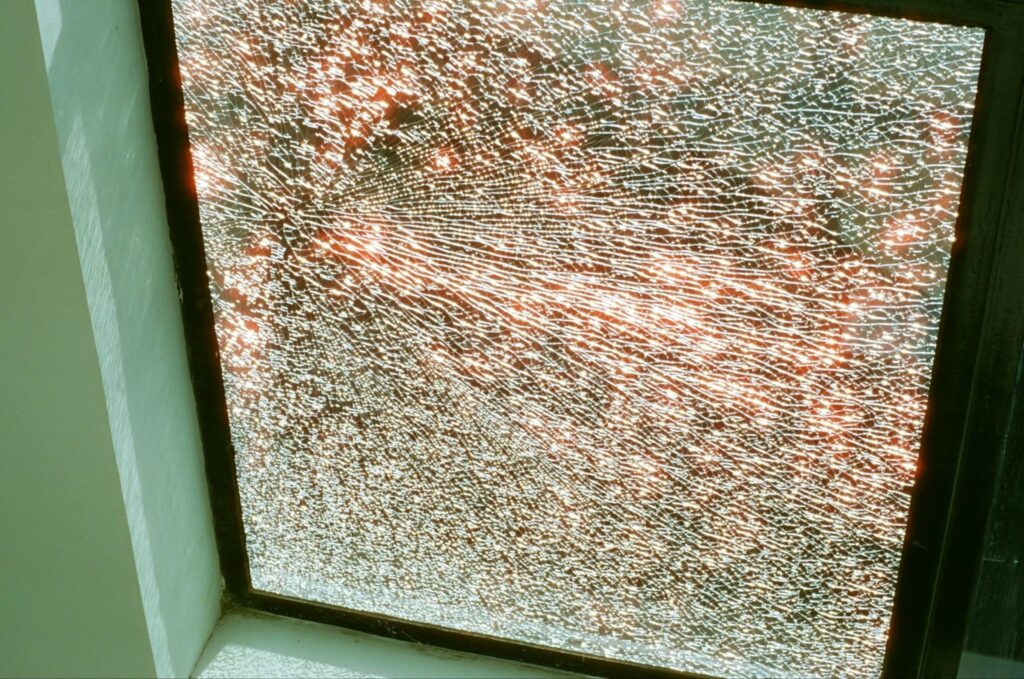
Security glass windows are reinforced windows made from different types of security glazing (including glass and/or non-glass glazing materials) that are highly resistant to impacts.
Whether it’s a flying piece of storm debris, an intentional blow from a hammer, or even a ballistic impact, these windows are built to withstand varying threats faced by commercial properties across industries and locations.
Security glass windows can be installed as part of new construction or retrofitted into existing buildings, either by removing and replacing the existing windows or, oftentimes, by mounting security glazing right on top of the existing glass, shielding it behind a new protective barrier.
There are many different types of security glass windows out there, but the most robust versions employ polycarbonate in their composition. This is because polycarbonate is an incredibly durable (read: virtually unbreakable) thermoplastic material that can be made to look and feel very similar to traditional glass, but will not break or shatter, even when faced with the most extreme impacts.
There are two main types of polycarbonate-based security glass windows:
Full polycarbonate solutions are often favored for retrofit applications because it is very easy to install polycarbonate security glazing over existing windows. This can be achieved using retrofittable framing adapters that are installed into or on top of the current framing, securely holding the polycarbonate infills (glazing panels) in place.
Glass-clad polycarbonate solutions can be a little trickier to retrofit, though it is still possible in many cases. GCP is often favored because the exterior side (attack side) retains all the qualities of glass — because it is glass — while the interior (safe side) has the flexibility and safety of polycarbonate. This means that even if the exterior is damaged, no interior spalling occurs. In other words, no pieces of broken glass fly inwards.
Whether full polycarbonate or GCP, either of these options results in security glass windows that can withstand everything from forced entry attempts to ballistic attacks.
One of the biggest benefits of security glass windows is that they dramatically improve building security without changing the way a property looks or functions. Unlike bars, grilles, or opaque security barriers, high-quality security glazing maintains curb appeal, natural light transmission, and outward visibility, factors that are especially important for customer-facing businesses.
From a protection standpoint, security glass windows create a continuous, always-on defensive layer across a building’s most vulnerable openings. They are designed to resist a wide range of real-world threats, including forced entry attempts, burglary tools, smash-and-grab theft, vandalism, rioting and looting, storm debris, accidental impacts, and, in higher-rated systems, ballistic and blast threats.
Because these windows do not rely on manual activation, power, or staff intervention, they provide 24/7 protection. While they can be used in tandem with after-hours security solutions like roll-down shutters, security glass windows are highly effective as a standalone physical security measure, particularly for locations that must remain visually open during business hours.
Security glass windows are used across nearly every commercial sector, including:
Another major benefit is flexibility in installation. When retrofitting is possible, commercial security glass can often be added over existing glazing rather than requiring full window replacement. This significantly reduces costs, construction time, and operational disruption, making security upgrades achievable even for occupied or high-traffic properties.
In short, security glass windows offer a rare combination of strength, discretion, and long-term value, making them one of the most practical investments a commercial property can make to reduce risks.
Not all security glass windows offer the same level of protection, durability, or performance. Choosing the right solution requires evaluating the specific risks your property faces and matching them with glazing systems designed to withstand those threats. Below are the most important features to consider.
The first question to ask is: What am I protecting against? Security glass windows are available in a range of performance levels, from forced-entry-resistant to ballistic-grade and blast-rated systems.
Look for glazing that has been tested to recognized standards such as UL 972 (burglary resistance), ASTM forced-entry standards, or UL 752 ballistic ratings. These certifications provide objective proof of how the glass performs under real-world attack conditions.
If the solution includes polycarbonate, as the most robust systems do, material quality matters. Not all polycarbonate is created equal. Thickness, formulation, and layering all impact performance.
Multi-layer systems that balance rigidity and energy absorption tend to perform best in commercial environments.
One of the biggest dangers of traditional glass during an impact event is spalling: when shards break loose and fly inward. High-quality security glass windows are designed to prevent this.
Glass-clad polycarbonate systems are particularly effective here, as the interior polycarbonate layer captures fragments even if the exterior glass is damaged. This feature is critical in occupied spaces where protecting people is just as important as stopping intrusion.
Security upgrades shouldn’t compromise the look or feel of a space. Premium security glass windows maintain excellent optical clarity, minimal distortion, and high visible light transmission.
This is especially important for retail storefronts, offices, and hospitality spaces where visibility, branding, and customer experience matter. Always evaluate how the glazing will look once installed, not just how strong it is.
Commercial installations demand longevity. Without proper UV protection, some plastic-based glazing can yellow, haze, or degrade over time.
Look for systems that incorporate UV-resistant coatings or materials engineered for long-term exposure to sunlight. This ensures the windows remain clear and attractive for years, not just immediately after installation.
For existing buildings, retrofit compatibility can be a deciding factor. Some security glass windows require full window replacement, while others can be installed over existing glass using specialized framing systems.
Retrofit-friendly solutions reduce downtime, limit disruption to occupants, and often deliver a faster return on investment. An experienced provider can assess your existing windows and recommend the most efficient path forward.
Security glass windows play a critical role in protecting commercial properties without sacrificing aesthetics, visibility, or functionality. Using advanced glazing materials like polycarbonate and glass-clad polycarbonate, these systems provide always-there protection against forced entry, impacts, and even worst-case active threats.
However, it’s important to know what to look for when choosing security glass for a building’s windows to ensure things like material quality, threat resistance, and retrofit compatibility are right for your needs, goals, and budget.
With the right security glazing solutions in place, commercial facilities can significantly increase physical security while maintaining an open, inviting environment.
Riot Glass offers a full range of security glazing and framing systems for commercial applications. Contact us today to get started with a free consultation.

HOW CAN WE HELP YOU?