
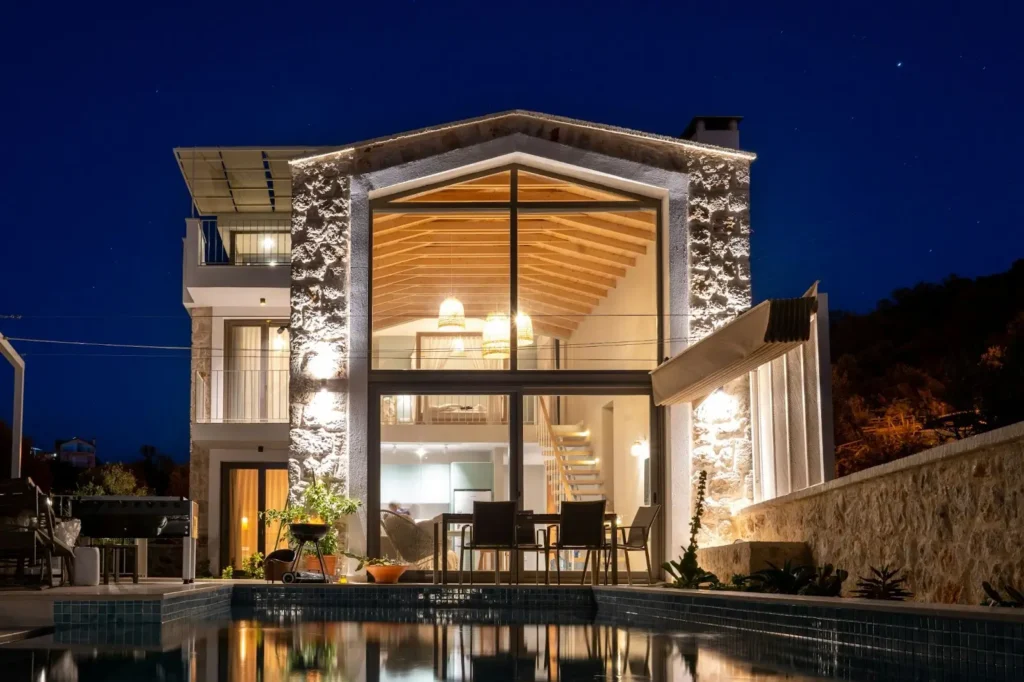
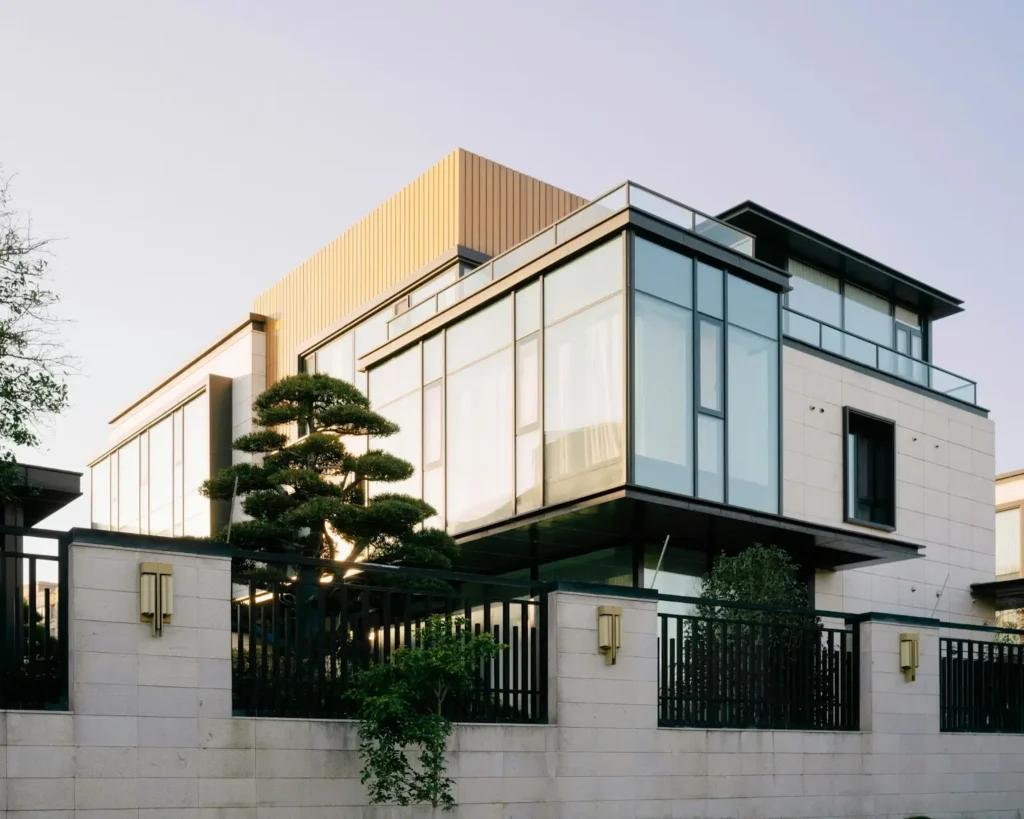
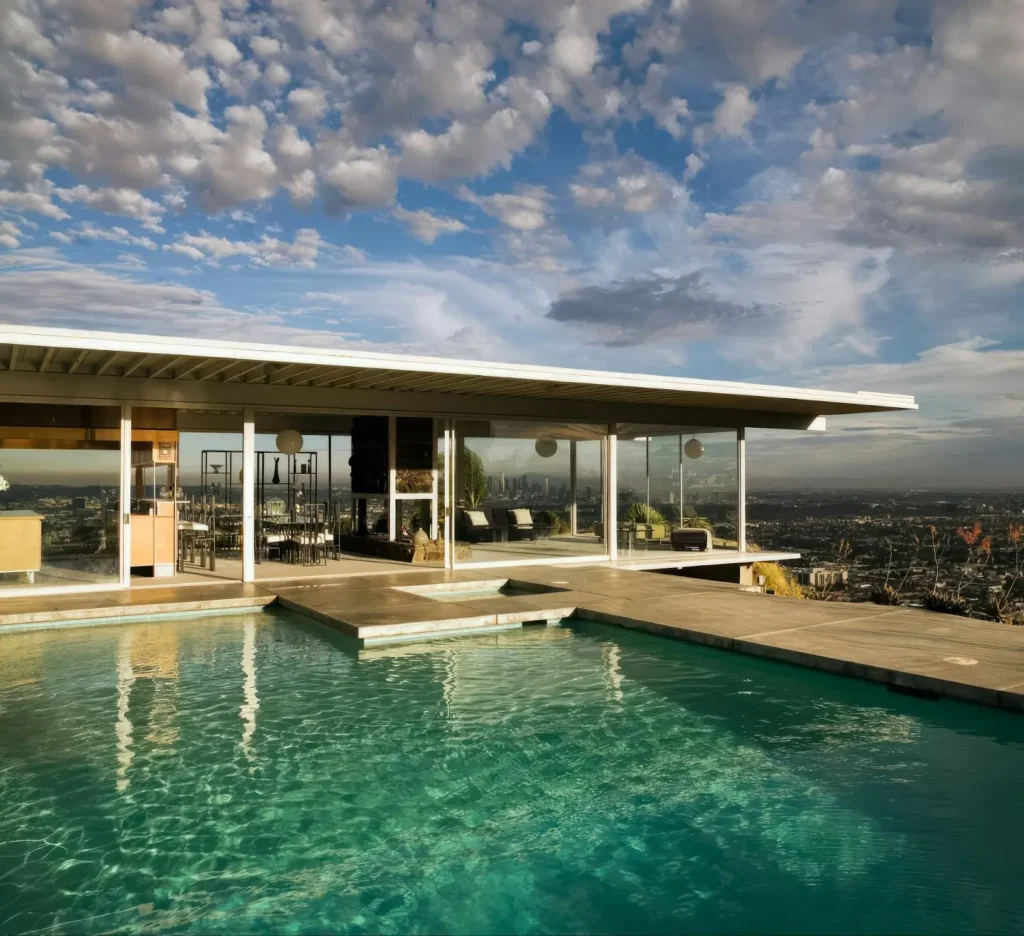
Many modern luxury homes have expansive glass windows that offer sweeping views of the outdoors as well as provide ample natural lighting within the home. These architectural features define elegance and modernity, and they’re a hallmark of high-end residential design.
However, despite their benefits, these extra-large windows also present challenges, especially when it comes to security. Expansive floor-to-ceiling window glass can be extremely vulnerable to forced entry, introducing major vulnerabilities in an era of rising concerns about burglary, home invasion, and targeted threats.
There’s a reason doors and windows are the most common points of entry during a break-in: they’re easy to exploit. With large expanses of glass, the security risks increase dramatically — not just because of the surface area but also because of the perception of vulnerability they create.
The most common threat to high-end homes with oversized windows is burglary. Criminals know that traditional glass can be shattered quickly with blunt force tools. Once a pane is broken, entry is virtually instantaneous.
Homes with expansive glass walls often have rear-facing windows with secluded views — perfect for criminals to operate unseen. Even homes with modern alarm systems and cameras can be compromised if the physical barrier itself fails in seconds.
Luxury homes are not just architecturally unique — they’re also often inhabited by individuals with heightened risk profiles. Executives, celebrities, high-net-worth individuals, politicians, and public personas may be targeted not only for theft but also for ideological reasons.
Consider scenarios like:
For individuals in high-risk professions or public roles, these are not abstract concerns. They are real security threats that require comprehensive planning and mitigation.
While the need to secure large glass windows is clear, actually doing so is easier said than done, especially in luxury residential settings where design and functionality are the top priorities. Traditional security measures often fall short when applied to modern architectural glass in high-end homes.
The security industry offers a wide range of glazing solutions for forced entry prevention, ballistic resistance, and even blast protection. However, most of these technologies are developed with more standard residential and commercial buildings in mind. Thus the dimensions of most security glazing tend to be standardized to fit more traditional applications.
Luxury homes often feature:
These unconventional window dimensions create a challenge: the majority of forced entry-resistant and ballistic-grade glazing products simply aren't manufactured in large enough sizes. They may also be too heavy to be practically installed in residential framing systems.
In many cases, retrofitting security glazing into a luxury home requires compromising on aesthetics or accepting visible reinforcements that detract from the design. For most high-end homeowners, this isn’t acceptable.
Homeowners who invest in custom architecture and panoramic views aren’t willing to sacrifice the appearance of their glass. That rules out many traditional security solutions, such as:
In the world of high-end residential architecture, any security solution must be discreet, elegant, and highly functional.
Until recently, homeowners, architects, and security consultants were stuck between two undesirable options: sacrifice appearance for security, or maintain aesthetics and live with the risk. Fortunately, that’s no longer the case.
Riot Glass has developed an innovative new product to address the challenges of securing homes with large glass windows: RG1-XL, an oversized security glazing system engineered specifically for luxury residential and commercial installations requiring extra-large size compatibility without compromising strength.
RG1-XL is a proprietary forced entry and bullet-resistant laminated glazing solution designed to fit larger-than-standard openings. It delivers robust protection against high-impact attacks while preserving the visual clarity and light transmission expected in luxury environments.
1. Built for Oversized Installations
Unlike many competing products that are limited by sheet size or framing system compatibility, RG1-XL is manufactured to span extra-wide and extra-tall openings (up to 128” by 300”), making it ideal for:
This makes it one of the only high-security glazing solutions on the market specifically created for both extra-large commercial and luxury residential glass applications.
2. Engineered for High-Level Threats
RG1-XL provides serious forced entry resistance and is tested to withstand:
The extra-large security glazing maintains its integrity long enough to delay or completely prevent entry, giving occupants time to react and law enforcement or security teams time to respond.
3. No Aesthetic Trade-Offs
One of the most impressive qualities of RG1-XL is how invisible the protection is. From the outside, it looks like normal architectural glass — crystal clear, frameless if desired, and available in a variety of finishes. From the inside, it preserves all the benefits of natural daylight and open sightlines. There are no distracting mullions, metal grids, or exterior attachments to detract from the design.
4. Retrofit-Friendly Design
RG1-XL is also designed for retrofitting. If you're working with an existing home, Riot Glass can engineer a solution that integrates into your current frames or provides matching custom frames. This minimizes disruption and preserves the integrity of the architectural design while dramatically upgrading security.
Securing a home with large glass windows is now an achievable goal. Thanks to advanced materials and engineering, security-conscious homeowners and high-risk individuals can now enjoy the elegance of their panoramic glass architecture without compromising safety.
Riot Glass RG1-XL is the first oversized security glazing solution that truly meets the demands of modern luxury homes. It delivers:
Whether you’re designing a new luxury home or looking to reinforce an existing one, Riot Glass offers the technology and expertise to protect what matters most — without sacrificing the view.
Contact Riot Glass today to schedule a security consultation or request a custom quote. Our experts will work with your architect or contractor to design the ideal solution for your windows.
If you’re looking for a retail security company to help you protect your business, you’re bound to come across many offering more traditional security measures, including surveillance and alarm systems. However, if you’re serious about preventing theft and property damage, what you’re really after is physical protection. So who can help?
When it comes to physical retail security companies, there are really only two that we think you need to know: Riot Glass (that’s us) and QMi, a leading manufacturer of security shutters and other physical retail security measures.
At Riot Glass, we understand that real protection starts with hardening your building envelope. While cameras and alarms can document a break-in or notify authorities, they don’t actually stop it. That’s where we come in.
Riot Glass specializes in making your retail storefronts virtually impenetrable, all while maintaining a clean, transparent appearance. We manufacture and install retrofittable security glazing systems designed to withstand forced entry attempts and related threats, including burglary, smash-and-grab attacks, rioting and looting, and even ballistic threats.
These solutions are engineered to protect against a wide range of real-world threats, from lone thieves to organized retail crime rings.
Retail businesses use Riot Glass systems in a wide variety of ways:
Installing Riot Glass allows retailers to create an invisible yet powerful layer of glass protection that keeps your business secure without sacrificing visibility or aesthetics. There are no moving parts and no visible signs of fortification — just 24/7 peace of mind.
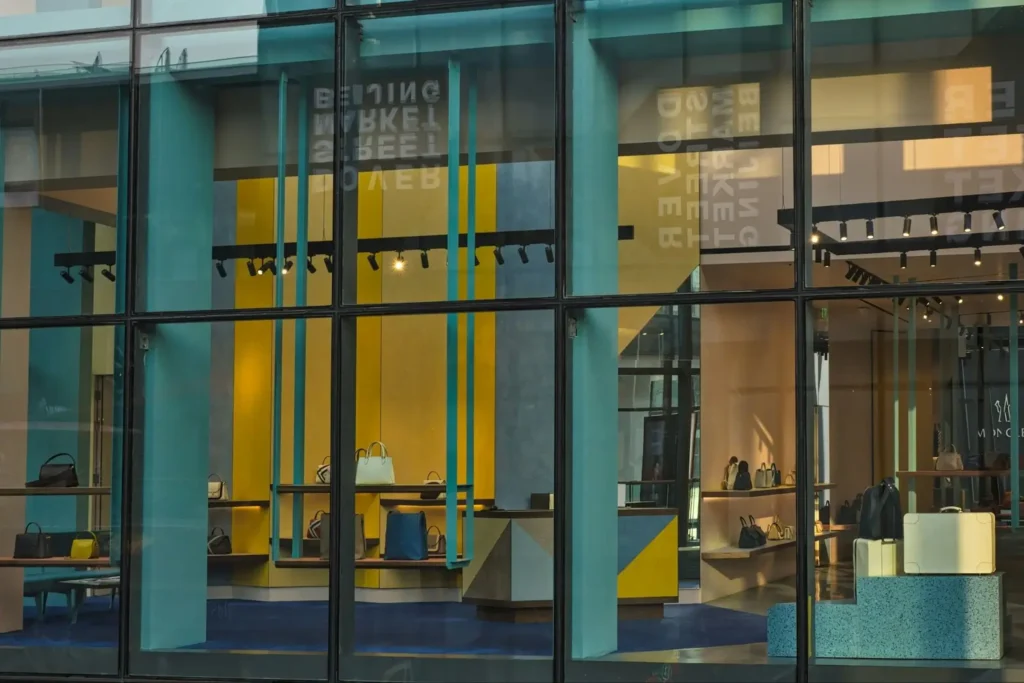
While Riot Glass secures your vulnerable glass areas 24/7, QMi provides the perfect complement by protecting doors and windows, loading docks, and storefronts when your business is closed.
As a leader in security shutters and other custom physical retail security barriers, QMi specializes in deployable systems that make it harder for bad actors to access your premises.
QMi products are engineered for convenience and strength. Shutters and grilles can be motorized, allowing for fast deployment at closing time.
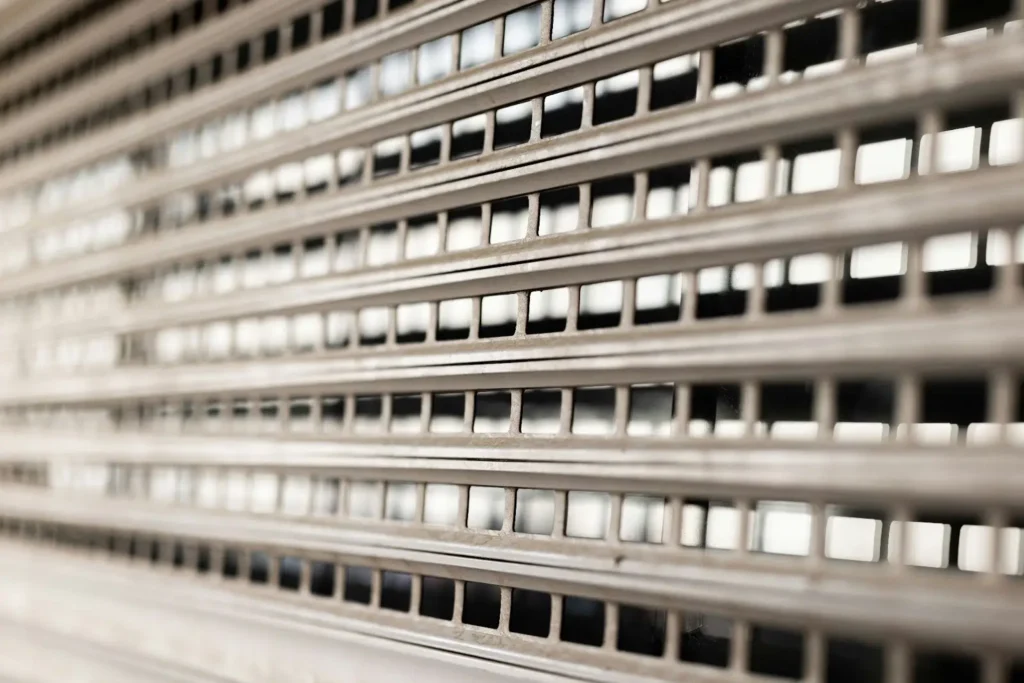
Retailers choose QMi when they want a visible deterrent or a mechanical barrier that adds an extra layer of protection outside of business hours — especially important for locations in urban environments or areas with frequent break-ins. Retailers use QMi security systems to secure:
While Riot Glass and QMi products offer powerful protection on their own, their true strength lies in working together to provide multi-layered physical retail security.
Riot Glass is perfect for high-visibility areas that need to be secured during business hours without looking like a fortress.
Our cost-effective commercial security glazing options look and function like standard commercial glass, allowing you to maintain curb appeal and natural light while still deterring and resisting break-in attempts.
Once installed, our glazing systems require no action from your staff. There’s nothing additional to remember to lock or activate — the protection is built into the glass itself.
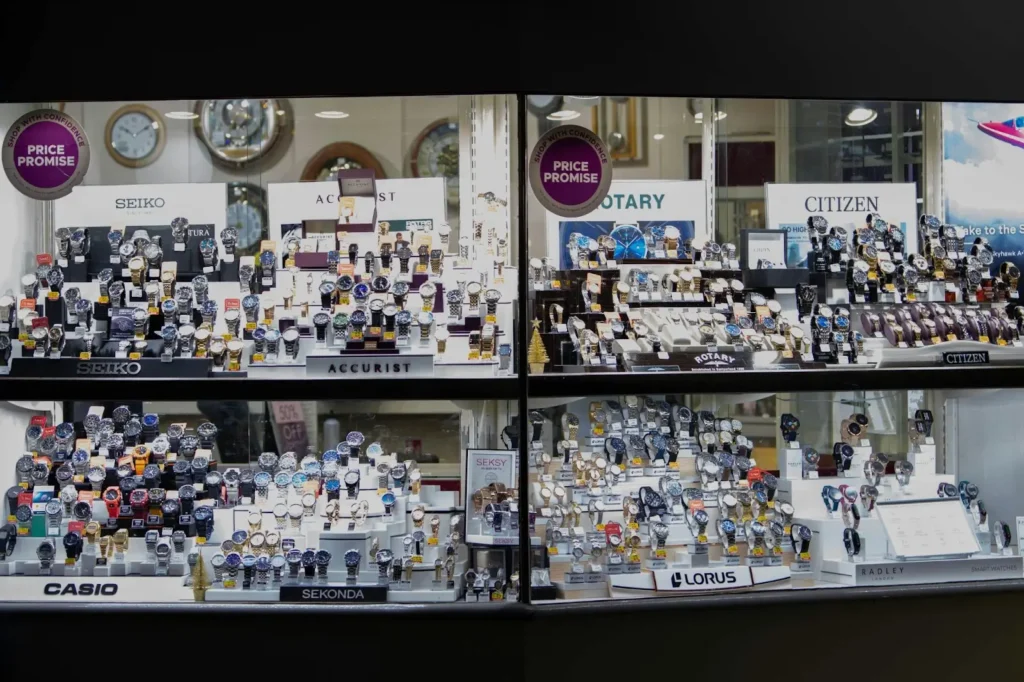
QMi security shutters and grilles step in to secure your building when the lights go off. Whether it’s a glass entryway door that thieves might target or a vulnerable display window that benefits from a highly visible deterrent, QMi’s mechanical barriers are designed to be a second line of defense.
Together, Riot Glass and QMi products create a comprehensive security strategy:
Retail crime is no longer a one-dimensional threat. Today’s criminals are coordinated, fast, and bold. Your store may be vulnerable to:
Without layered retail security, a single point of failure can result in major financial loss. However, using retail security company solutions from Riot Glass and QMi, you can close the gaps in your defenses and ensure that even determined criminals are met with resistance at every stage.
Surveillance cameras and alarm systems play a role in retail security, but they don’t physically stop intruders. To truly protect your business, you need true barriers that delay or prevent entry altogether — and that’s exactly what Riot Glass and QMi deliver.
Riot Glass reinforces your building’s weakest points: its windows and glass doors. QMi adds an extra level of protection to windows, doors, loading docks, and other entry points vulnerable to break-ins after hours. Working together, these systems give retailers the confidence to operate safely, day and night.
Whether you’re looking to secure a single high-end storefront or a national retail chain, our team can help you develop a customized, layered physical security plan tailored to your risk profile.
Contact Riot Glass today to speak with one of our retail security experts and start protecting your business with proven, reliable solutions!
If you operate a retail store, protecting your employees, merchandise, and physical storefront is likely a constant concern. From everyday shoplifting to more serious threats like forced entry, burglary, smash-and-grab theft, rioting, looting, and vandalism, the risks facing retailers are real, and they’re growing.
Whether we’re talking about jewelry stores and luxury fashion boutiques or 24-hour convenience stores and cannabis dispensaries, one of the most common tools used to secure retail locations is the trusty retail surveillance system. Security cameras are widely viewed as a first line of defense. But how effective are they really?
The truth is that while surveillance systems play an important role in deterring and documenting criminal behavior, they cannot physically stop crimes from happening. That’s why many retail businesses are turning to a multi-layered security strategy, combining visual deterrents like cameras with physical barriers like Riot Glass to prevent entry altogether.
Let’s explore the facts behind retail surveillance systems, including what they do well, where they fall short, and how to build a smarter, more robust security solution.
Retail surveillance cameras are everywhere, and for good reason: they work as a visual deterrent and a source of valuable evidence.
The mere presence of visible retail surveillance system cameras can dissuade a would-be thief. Knowing they’re being watched and that their actions are being recorded makes many criminals think twice.
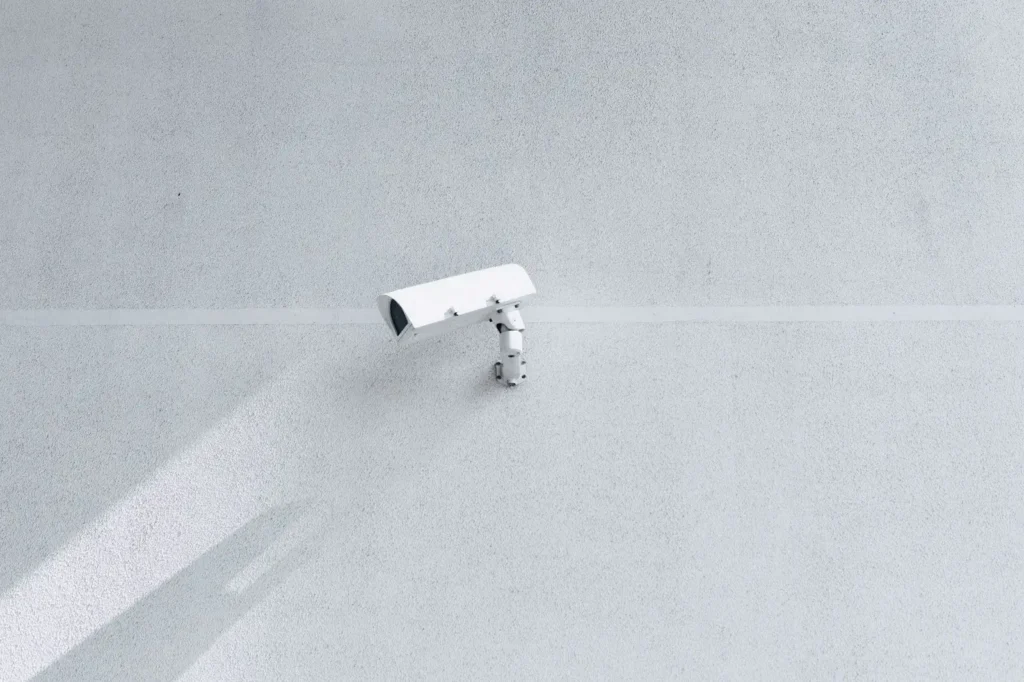
Even inexpensive dummy cameras or visibly outdated systems can create a psychological barrier. While fake cameras don’t offer any real protection or evidence, they highlight just how powerful the idea of surveillance can be in reducing opportunistic theft.
If a security incident does occur, footage from a properly placed surveillance system can become invaluable.
In short, cameras offer peace of mind and accountability, but that doesn’t mean they offer true protection.
Despite their many benefits, surveillance cameras have major limitations when it comes to preventing physical threats.
A security camera can show you a break-in, but it can’t stop it. In the case of smash-and-grab robberies, a thief (or group of thieves) might be in and out of your store in under a minute, grabbing high-value merchandise and leaving behind broken doors, windows, and display cases. The footage might help later, but the damage is already done.
Cameras are only as useful as the footage they capture. Unfortunately, criminals often wear masks, hoodies, or other disguises to conceal their identity.
Worse yet, in situations involving rioting and looting, large crowds and rapid destruction can render surveillance footage nearly useless. During these chaotic events, camera views may be obstructed, or systems can be disabled or destroyed.
Modern surveillance systems can be monitored in real-time, but unless you have a 24/7 security team ready to respond at a moment’s notice, criminals may already be gone before anyone notices. Even with advanced systems using AI alerts, response time lags behind the speed of criminal activity.
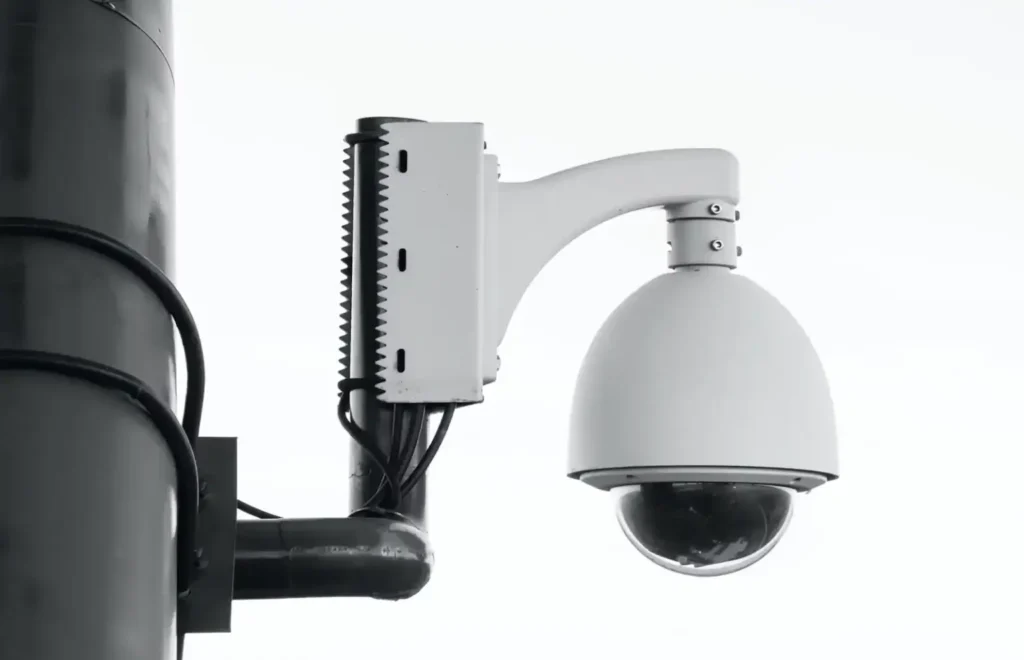
If your security plan relies solely on cameras, you’re leaving a major vulnerability wide open. That’s why more retailers are pairing their retail surveillance system with physical security solutions, especially at key access points like glass entryway doors and storefront windows.
Riot Glass retrofit security glazing systems are designed to resist forced entry attempts using tools like crowbars, bricks, bats, and even bullets, depending on the glazing’s specific composition and security rating.
Unlike traditional tempered glass, which is frequently used in retail storefronts yet shatters easily, Riot Glass stays firmly in place even when struck repeatedly. It turns vulnerable glass storefronts into hardened barriers that criminals can’t easily penetrate.
Because Riot Glass can’t be easily breached, smash-and-grab attempts often fail completely. Criminals are forced to either flee the scene or spend significantly more time trying to gain entry — time that increases their risk of being caught. Its resistance to sustained attacks makes it a smart solution for businesses concerned about riots or civil unrest as well.
Security professionals agree that the best approach to retail protection is a layered security system where each element reinforces the next. Surveillance systems and Riot Glass work together to:
This combination of physical and visual deterrents transforms your store from an easy target into a hard one. When criminals encounter a retail location with reinforced windows and doors, their plans often unravel quickly.
Riot Glass visibly resists impact, refusing to shatter or give way under the types of strikes that would normally result in immediate entry. In many attempted break-ins, especially those involving smash-and-grab tactics, this resistance is enough to stop the crime in its tracks.
Thieves typically operate under tight time constraints — they want to get in and out fast. When their entry attempts are met with unexpected resistance, they’re far more likely to flee before drawing attention or being caught.
Meanwhile, surveillance cameras are capturing the entire event, documenting the suspect’s actions and behavior, which can be critical for police investigations and insurance claims. Together, the systems create a proactive defense, reducing the chance of loss, minimizing property damage, and helping ensure business continuity, even in high-risk environments.
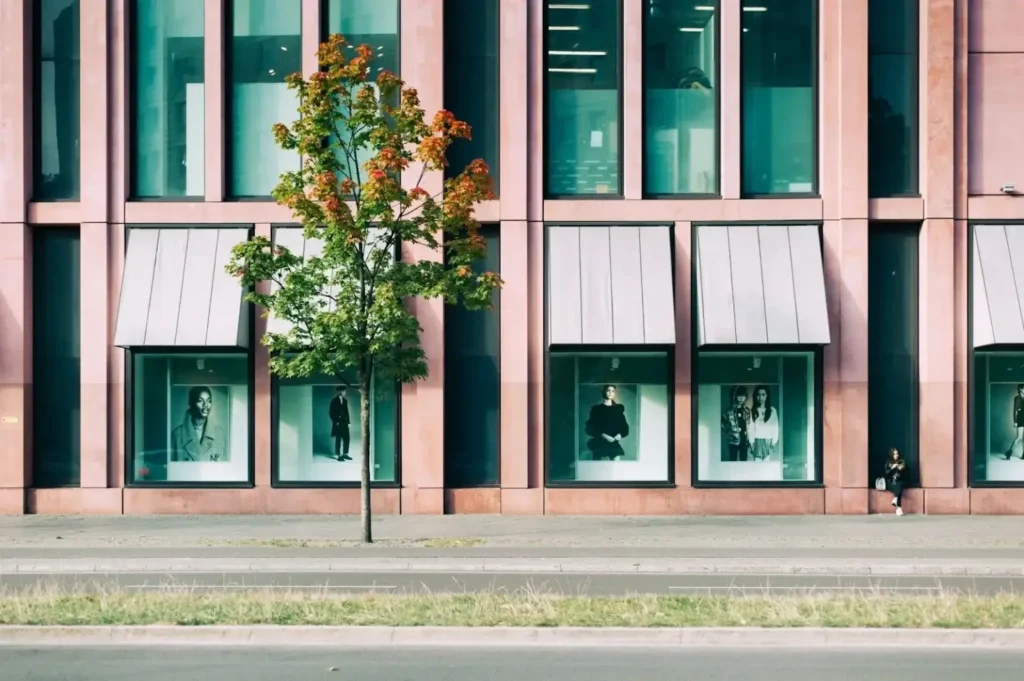
Crime targeting retail businesses is on the rise in many areas. From organized retail theft rings to flash-mob-style smash-and-grab or looting events, today’s threats are more aggressive and coordinated than ever.
At the same time, retailers are dealing with slimmer margins and higher costs, making it even more critical to protect assets and avoid downtime due to damage or theft.
Investing in a proactive physical security solution like Riot Glass, combined with your existing retail surveillance system, offers comprehensive protection for your inventory, your employees, your customers, and your ability to stay open for business.
While retail surveillance systems are an essential tool, they are not enough on their own to prevent property damage or protect against determined criminals.
Combining visible surveillance with physical forced entry protection like Riot Glass helps retail businesses take a proactive stance against both opportunistic theft and organized crime.
Don’t wait until a costly break-in forces you to rethink your security strategy — take action now to build a safer, stronger retail environment. Contact Riot Glass today for a free consultation.
When it comes to securing commercial buildings, glass is often the weakest point in the architectural envelope.
Windows and glass doors may offer natural light, aesthetics, and functionality, but they are also vulnerable to forced entry, vandalism, and even ballistic threats. Thus, one of the most critical aspects of any commercial building’s security is the type of glass used.
| Glass Type | Security | Best Use | Advantage | Weakness | Typical Material Price* |
|---|---|---|---|---|---|
| Annealed | Very Low | Low-risk, budget | Cheapest | Breaks instantly; sharp shards | $5–$10 / sq ft |
| Tempered | Moderate | Safety-focused areas | Safer break pattern | Still easy to smash | $12–$25 / sq ft |
| Laminated | High | Urban retail, offices | Holds together on impact | Cracks/spalls under long attack | $25–$45 / sq ft |
| Security Glazing (Polycarbonate / Hybrid) | Very High | High-risk sites | Resists forced entry; blast/ballistic options | Can scratch (AR coatings help) | $70–$150+ / sq ft |
* Approximate material ranges only, excluding framing, labor, thickness upgrades, and rating specs. Pricing varies by project.
Exactly how does glass type affect building security? Quite significantly, as it turns out. Understanding the properties of different glass types, and their respective strengths and vulnerabilities, can help building owners and facility managers make informed decisions to better protect people, assets, and operations.
Most modern commercial buildings use a significant amount of glass in their architectural design. From storefronts and lobbies to conference rooms and exterior office windows, glass is everywhere. While this transparency improves natural light transmission, visibility, and aesthetic appeal, it also introduces vulnerabilities.
Intruders often target glass first because standard window panes are relatively easy to shatter. In high-risk commercial facilities, such as luxury retail stores, government buildings, schools, and corporate offices, this weakness can have serious consequences. That’s why the type of glass installed in a building plays a critical role in determining its overall security level.
Let’s explore several types of glass commonly found in commercial buildings, and how each contributes (or fails to contribute) to building security.
Annealed glass is the most basic form of glass. It’s inexpensive and used frequently in buildings, especially older ones or those where safety and security have not been prioritized, as it offers virtually no security. When broken, it shatters into sharp, jagged shards, posing a danger to occupants and making it easy for intruders to breach.
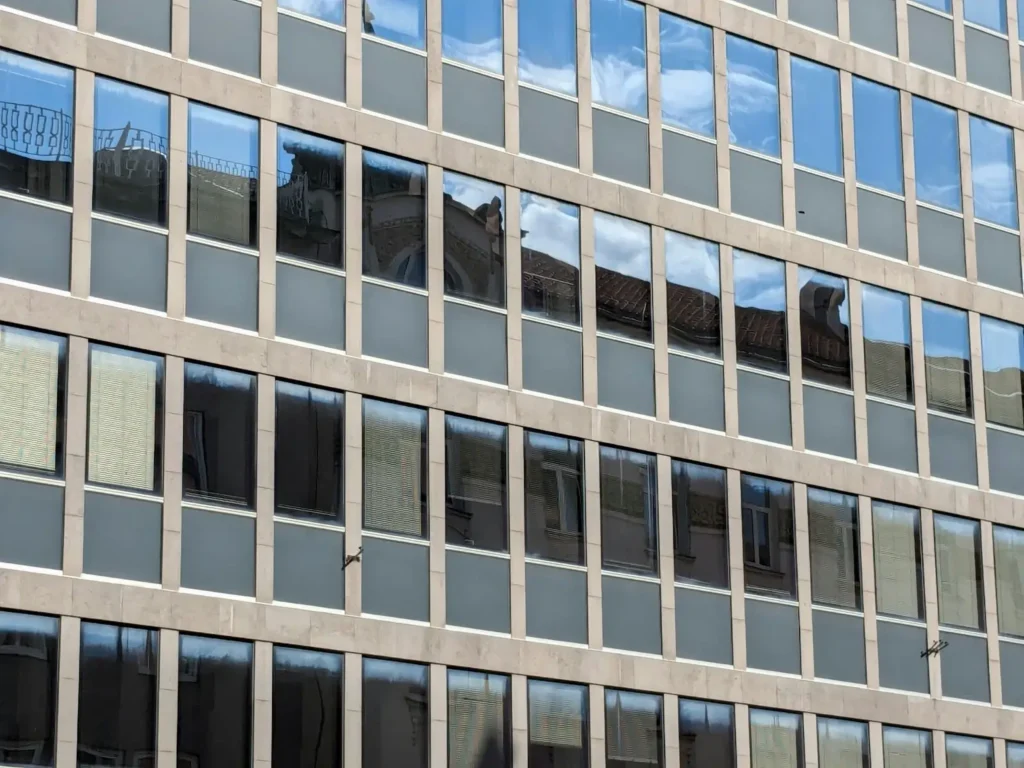
Tempered glass is a type of heat-treated safety glass that is about four to five times stronger than annealed glass. When broken, it crumbles into small, blunt pieces instead of sharp shards, which reduces the risk of injury.
Tempered glass is commonly used in commercial storefronts, glass doors, and other exterior-facing elements. While it’s more resistant to breakage than annealed glass, it can still be shattered relatively easily with enough force, such as an accidental impact from a blunt object or a smash-and-grab attempt.
Laminated commercial security glass consists of two or more layers of strengthened glass bonded together with an interlayer, usually made of polyvinyl butyral (PVB) or ethylene-vinyl acetate (EVA). When broken, the interlayer holds the glass fragments in place, making it more difficult for an intruder to gain entry.
Laminated security glass is frequently used in applications where impact resistance is important for certain areas, such as exterior office building windows, glass entryway doors, and high-end storefronts. It provides far better protection than tempered glass, especially against vandalism and forced entry.
Non-glass security glazing refers to a category of high-performance glazing materials designed specifically to resist breakage, forced entry, ballistic attacks, and other threats. These can include polycarbonate, acrylic, or hybrid systems that combine glass with advanced plastics.
Non-glass security glazing is virtually unbreakable under most conditions and offers a lightweight, retrofittable alternative to traditional security glass. It’s ideal for commercial buildings facing elevated threat levels, from burglary and smash-and-grab theft to rioting and active threat scenarios.
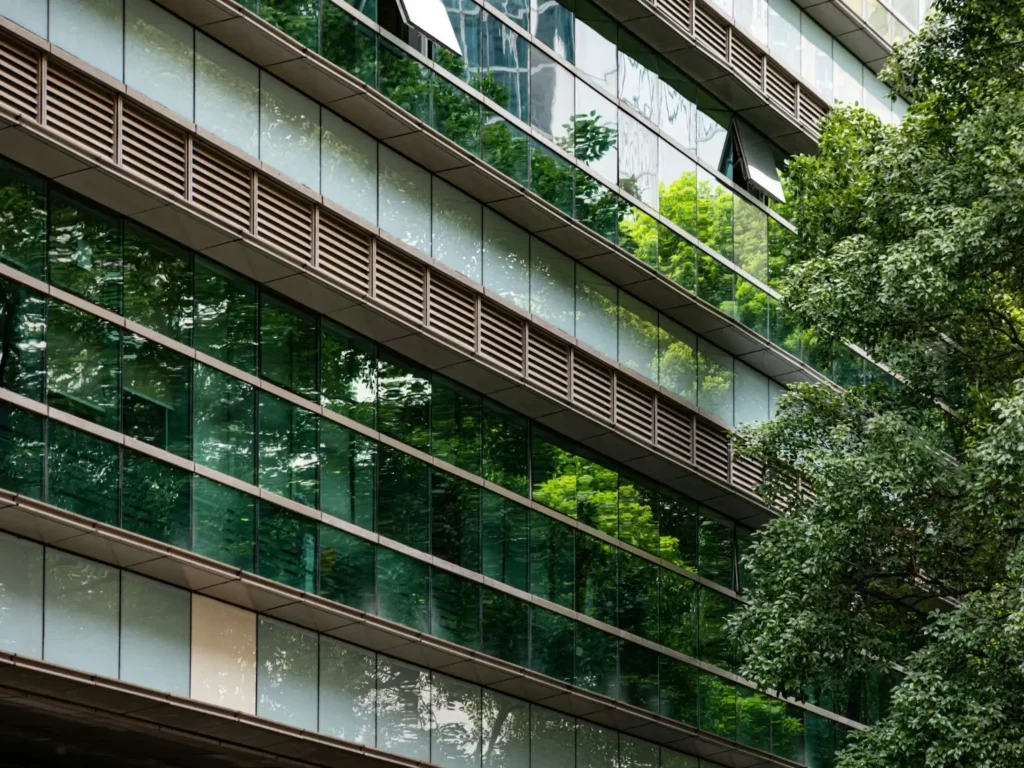
To better understand how glass type affects building security, it’s helpful to examine how each type of glazing stands up to real-world threats.
Standard and tempered glass typically fail within seconds under impact. Laminated glass holds up longer, deterring intruders and delaying entry. Non-glass or hybrid security glazing can resist forced entry indefinitely, depending on the system and its specific ratings.
Graffiti and physical damage from blunt objects are common in urban environments. Laminated glass and security glazing resist surface damage better than standard glass, and polycarbonate systems can withstand repeated blows without compromising integrity.
Only specialized laminated security glass systems and polycarbonate-based security glazing designed for ballistic resistance can stop bullets. Standard and tempered glass will shatter immediately on impact.
In high-risk sectors like government, energy, or defense, blast protection is a growing concern. Laminated security glass can offer some protection by holding shards together during a blast event, while glass-clad polycarbonate or full polycarbonate security glazing systems can provide even more blast mitigation.
In scenarios involving active shooters or other active threats, standard glass provides zero protection. Security glazing, particularly non-glass options, can significantly delay or even completely prevent attackers from breaching entry points, buying critical time for emergency response.
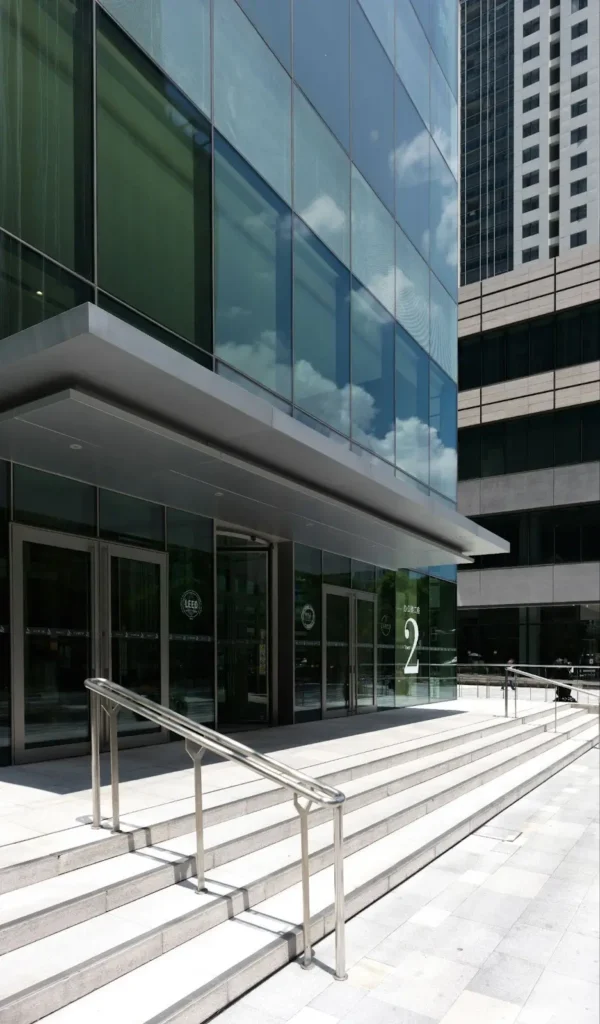
Choosing the right glass type can significantly improve your building’s security posture. While no glass is completely impervious to every threat, many options greatly delay intruders, minimize damage, and increase the overall safety and security of occupants.
The upgrade from annealed or tempered glass to laminated glass or non-glass security glazing offers a long-term investment in safety, security, peace of mind, and business continuity. For commercial properties, this investment often pays off by:
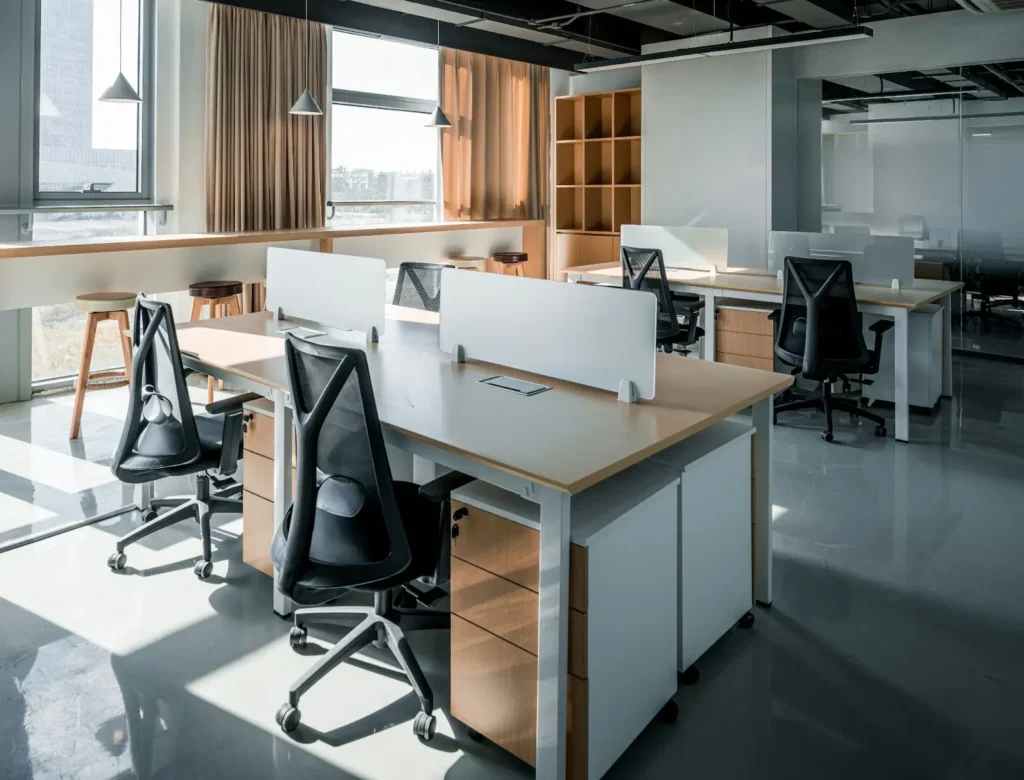
If you’re evaluating the types of glazing to use in your commercial property, consider the following:
So, how does glass type affect building security? The answer lies in understanding that not all glass, even security glass, is created equal.
Annealed and tempered glass might meet building codes, but they often fall short when it comes to real-world threats. Laminated glass and non-glass security glazing systems, on the other hand, offer hardened protection against break-ins, vandalism, ballistic threats, and more.
For building owners, property managers, and security professionals, choosing the right type of glass for a whole building, or upgrading to a stronger solution for key areas, is one of the most effective steps you can take to secure a commercial property.
Riot Glass specializes in advanced security glazing solutions that are engineered to meet the evolving security needs of commercial buildings. Whether you’re concerned about forced entry, rioting and looting, or active threats, we can help you choose and implement the right protection.
Contact us today to learn more about our high-performance glazing systems and how they can help strengthen your building’s defenses without compromising appearance or functionality.