
Written By: Brad Campbell | October 21, 2026
Forced entry and burglary, civil unrest and rioting, vandalism, and targeted attacks are just a few of the day-to-day threats to office building security.
Plus, with the sheer amount of glass most modern office buildings feature, they’re particularly vulnerable to such physical threats.
That’s why security glazing deserves serious consideration when evaluating ways to enhance an office building’s physical security.
In an office building’s security, glass type plays an outsized role. Standard commercial glass, even tempered safety glass, which is four to five times stronger than regular window glass, offers very little resistance to a determined intruder.
A brick, a hammer, a pry bar, a bat, or another heavy object or hand tool thrown or swung in the right place can open up an entry point in a matter of seconds. Once the glass is shattered, so is any barrier between the outside and whatever (or whoever) is inside. For an office building, that’s a serious liability.
Office buildings tend to house expensive equipment, sensitive data, and, most importantly, people, often during predictable business hours that make it easy for bad actors to plan around.
These properties are also often more exposed to certain types of threats than other commercial properties. They’re frequently located in downtown cores or business districts, which puts them squarely in the path of civil unrest and rioting.
Additionally, offices tend to have high employee turnover and visitor traffic, which increases the odds of disgruntled former employees or other unauthorized individuals attempting to gain entry.
Because many office buildings are designed with glass curtain walls and storefront-style glass entryway doors and windows, there’s typically more exposed glass to worry about than in other types of commercial buildings.
Security glazing addresses all of this without requiring a building to give up its glass-forward design.
Rather than replacing windows and doors with something heavier or less transparent, office building security glazing reinforces the glass that’s already there, or sometimes replaces it with a stronger equivalent, without requiring a major renovation. The building maintains its appearance, curb appeal, natural light, and visibility, while gaining resistance to forced entry, blunt impacts, and even ballistic attacks.
Not every pane of glass in an office building carries the same level of risk, so it’s important to understand where and how to layer security glazing to achieve the most effective protection.
Entryway doors and exterior windows are the first line of defense against forced entry, and they're also the most exposed to accidental impacts, vandalism, and general wear.
Because exterior glazing takes the brunt of nearly every physical threat an office building faces, it's usually the first place worth reinforcing.
Retrofitting existing exterior doors and windows with a protective glazing layer is one of the most cost-effective ways to improve an office building’s security.
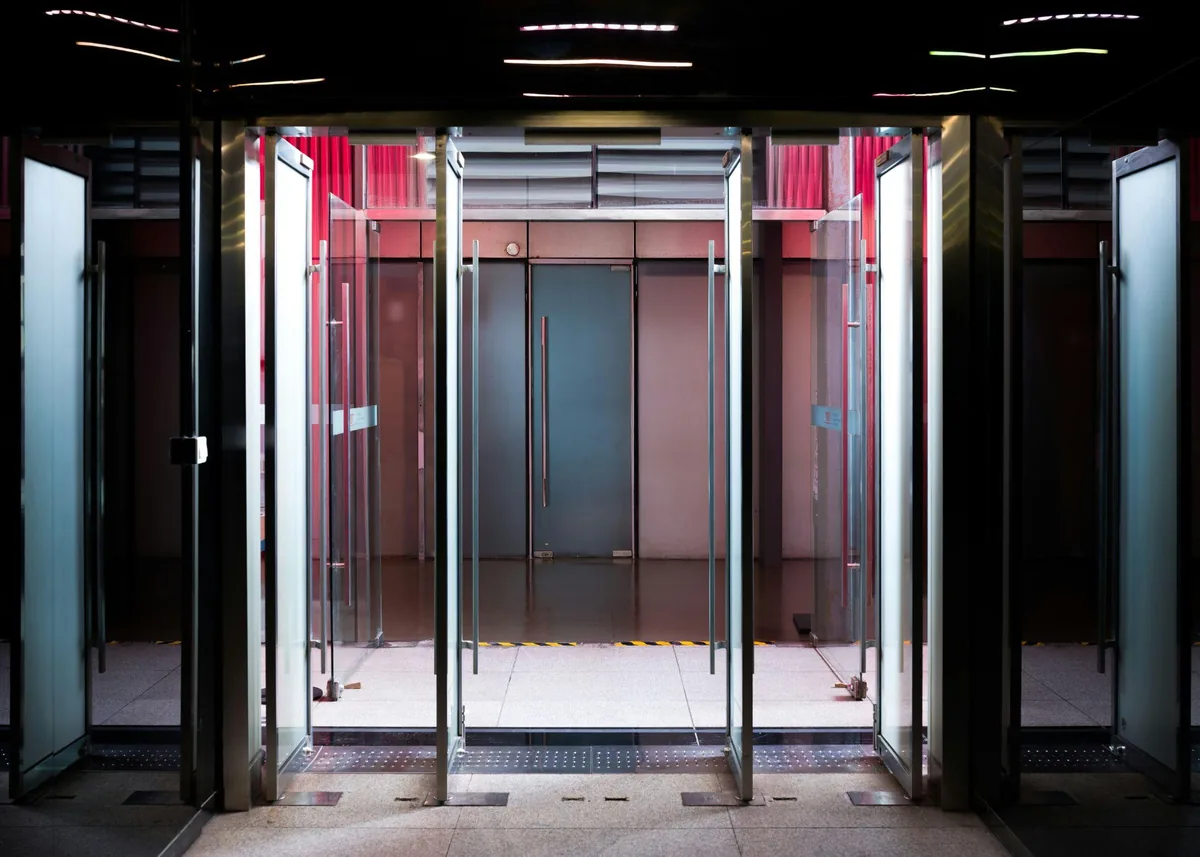
Reinforcing interior glass doors and partition walls provides a second layer of defense, securing areas within an office building in the event an intruder or attacker gets past the exterior.
Open floor plans and glass-walled offices have become the norm in modern office design, but that same openness means an intruder who breaches the exterior can often move freely through the rest of the building unless interior glazing is also reinforced.
Security glazing on interior partitions is especially valuable for buildings that house multiple tenants or departments, since it can help contain a threat to one area rather than letting it spread through the entire floor.
Executives can sometimes be the targets of attacks, whether from a disgruntled employee, a personal dispute that follows someone into the workplace, or a targeted act of violence.
Additional executive protection here can be necessary, particularly for C-suite offices, boardrooms, and conference rooms where sensitive conversations and decision-making happen.
Reinforcing these spaces gives occupants extra time and protection in a worst-case scenario, whether that means resisting a determined attacker at the door long enough for help to arrive or providing a genuine ballistic barrier in active threat situations.
Selecting the right security glazing for an office building comes down to which threats are most relevant to a given space.
For pure forced entry prevention and impact resistance, polycarbonate-based security glazing, such as AP-Series glazing from Riot Glass, is the ideal solution. It can easily be retrofitted over many types of existing glass doors and windows, protecting the glass from impacts and breakage and preventing a would-be intruder from forcing entry.
AP-Series glazing maintains high optical clarity, so it won’t distort the appearance of an office building’s glass doors or windows, and installation typically doesn’t require replacing existing framing.
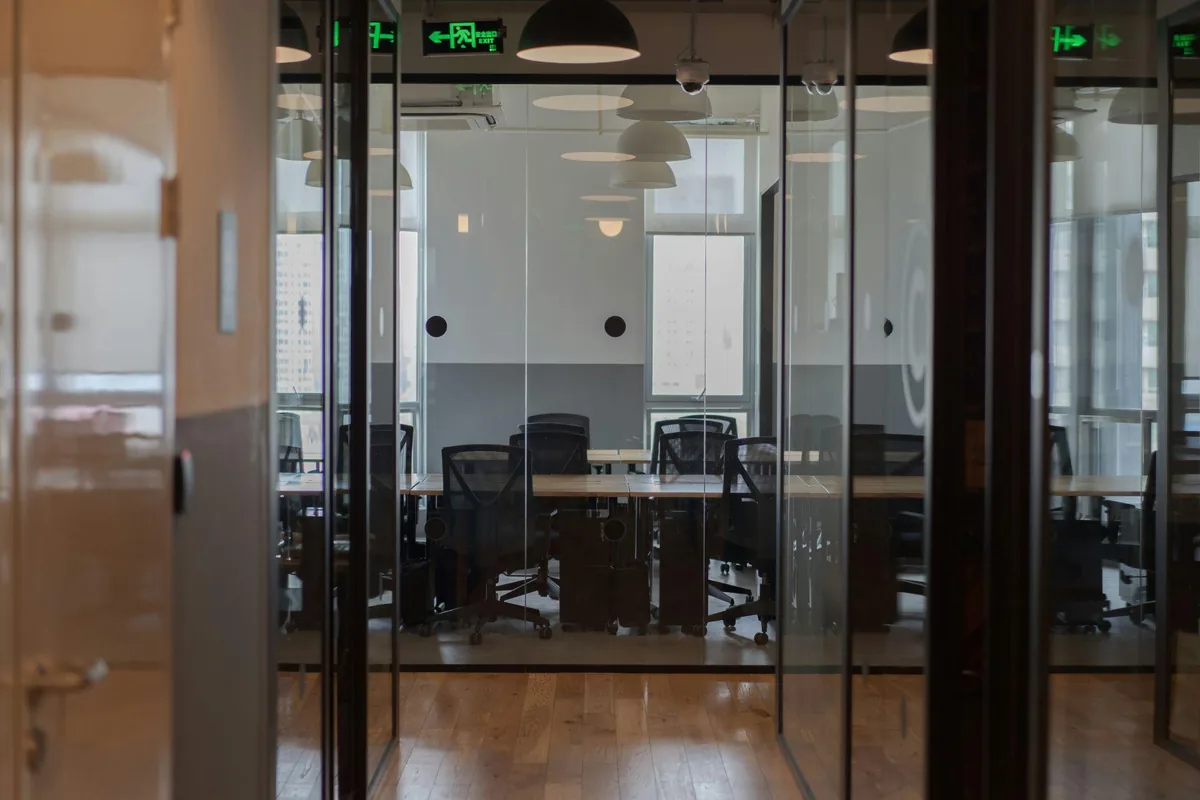
For active threat mitigation and executive protection, glass-clad polycarbonate is often the best option. It combines a strengthened glass exterior (attack side) with a polycarbonate interior (safe side) for high levels of ballistic resistance. Some varieties of glass-clad polycarbonate, like Riot Glass RG-Series glazing, are retrofittable, or they can be used to replace existing glass.
Since it has an exterior glass surface, glass-clad polycarbonate is also often desirable for exterior-facing glass doors and windows, where office buildings want to maintain the exact look and feel of real glass. This makes it a popular choice for lobbies and street-facing entryway doors and windows.
Both AP-Series and RG-Series glazing are available across a full range of UL 752 ballistic ratings, so building owners can select the level of protection that matches their specific risk assessment rather than over- or under-investing in office building security.
Protecting office buildings and their occupants from security threats doesn't have to come at the expense of the open, glass-forward design that makes these buildings appealing in the first place.
With the right glazing in the right locations, building owners can protect their people and property against forced entry, active threats, and everyday impacts while keeping the building looking exactly as intended.
Contact Riot Glass to learn more about our commercial security glazing solutions for office buildings.
No. Both AP-Series and RG-Series glazing maintain high optical clarity, so the building keeps its existing appearance.
Yes. Most Riot Glass products are designed to retrofit over existing glass and framing.
It depends on the building's specific risk factors, including location, tenant type, and past incidents. A threat assessment is the best starting point.
No. Interior partitions, executive offices, and conference rooms often benefit from a second layer of protection as well.

HOW CAN WE HELP YOU?