Riot Glass retail security services center around providing and helping implement a range of security glazing and framing products that can be used to physically secure businesses and commercial facilities, including retail stores.
No matter what type of retail store you own, there’s a wide range of Riot Glass retail security products that you can choose from to protect your storefront against threats, including forced entry and burglary, smash-and-grab theft, rioting and looting, vandalism, storm damage, and more.
Riot Glass RG Series security glass is a line of forced entry-resistant and ballistic-grade security glazing that can be used to replace a retail store’s existing glass or, in some cases, be retrofitted on top of it (depending on the weight, thickness, and composition of the glass).
Designed to protect commercial properties against active threats, Riot Glass RG Series security glass can provide extremely high levels of forced entry resistance for glass storefronts and high-risk retailers, protecting them against property damage and theft.
ArmorPlast AP Series security glazing is a polycarbonate-based solution that provides the virtually unbreakable strength of polycarbonate, yet is thinner and lighter than other types of security glass.
These polycarbonate-based security glazing infills look and feel just like traditional storefront glass, yet they are incredibly impact resistant, making them ideal for protecting retail stores against a full range of threats, from rioters and looters to hurricanes and strong windstorms.
Additionally, ArmorPlast is designed to be a fully retrofittable solution, meaning it can be mounted on top of almost any existing storefront glass using retrofittable framing adapters.
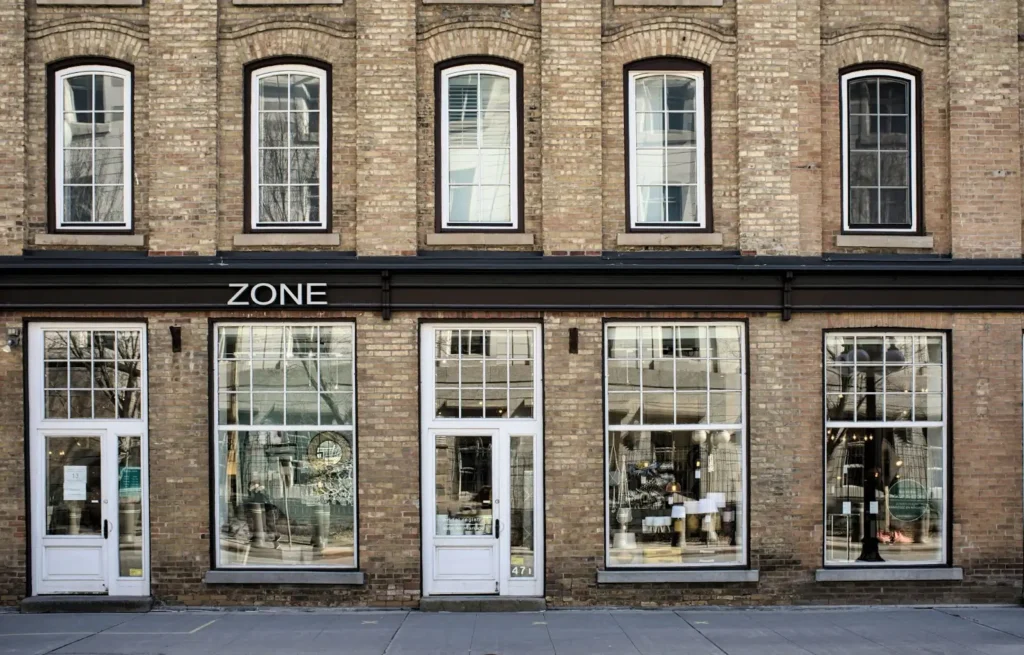
ArmorPlast creates a virtually unbreakable barrier over the existing glass, preventing it from breaking and shattering dangerously inwards upon impact, whether it be an impact from a sledgehammer during a forced entry attempt or from a piece of flying storm debris.
For most retail security applications, our retail security services experts typically recommend ArmorPlast AP25. This 1/4” glazing shield is strong enough to resist even the most determined forced entry attempts, yet thin and light enough that it can almost always be quickly and cost-effectively retrofitted onto storefronts.
The Universal Framing System (UFS) is extruded from 6063 T-5 aluminum with 1/8” walls - twice the thickness of most storefront framing. The heat-strengthened, incredibly rigid framing not only provides a solid mount for security infill panels but also strengthens the underlying storefront structure. The net result is a security barrier that is virtually impenetrable yet invisible to the untrained eye.
It can be purchased as full-length assemblies and sheets of our various security panels or packaged and sold as kits. Each stock length assembly contains 12 feet of the specific aluminum extrusions and all required gaskets and fasteners. The UFS is available in three different models: the Standard System, Heavy-Duty System, and Conversion System.
Depending where you’re located, we do offer installation services for our retail security products. If your store is located outside of our service areas, we can also work directly with your local glass contractor to ensure our solutions are installed to our high standards.
Riot Glass retrofit solutions utilize sleek, minimalistic framing and hardware in their installation, and the glazing itself looks and feels very much like traditional storefront window glass. This allows you to retain the overall appearance of your existing storefront, as well as continue to enjoy high natural light transmission and full visibility.
Yes! Certain Riot Glass products have been tested and certified for use as hurricane windows in hurricane zones, including Miami-Dade county, making them a viable alternative to traditional hurricane shutters, storm panels, and board-ups.
Riot Glass is suitable for any retail application where your goal is to protect against forced entry, theft, vandalism, storm damage, and other impact-related threats. Some of our most common retail clients include:
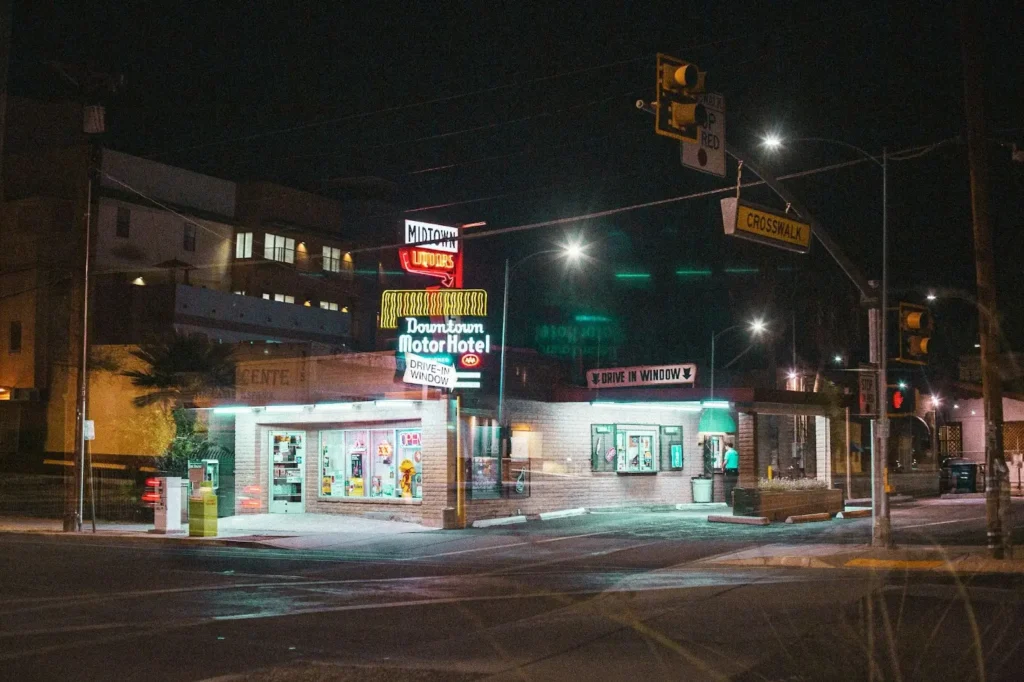
You can most certainly combine our security glazing solutions with solutions from other retail security services companies, such as security shutters, for a multi-layered approach to security. Riot Glass provides always-there storefront glass protection, which things like security shutters and grilles can provide an extra layer of after-hours protection.
To discuss how Riot Glass can help you protect your store against a full range of modern retail security threats, contact us today!
When people think of presidential protection, the Secret Service is probably the first thing that comes to mind, but bulletproof glass also plays an important role in protecting the president!
The secret service provides the president, vice president, and other high-profile individuals (including former presidents) with a dynamic form of physical protection, keeping an eye out for threats and securing nearby areas to ensure the safety of these individuals.
Bulletproof glass, on the other hand, provides a more static form of physical security, protecting the president against ballistic attacks and assassination attempts, particularly when traveling in a vehicle or giving a speech on a stage.
Though various presidents have used different forms of ballistic protection since WWII, it wasn’t until Reagan’s presidency in the 1980s that we saw more public instances of bullet-resistant glass protecting the president.
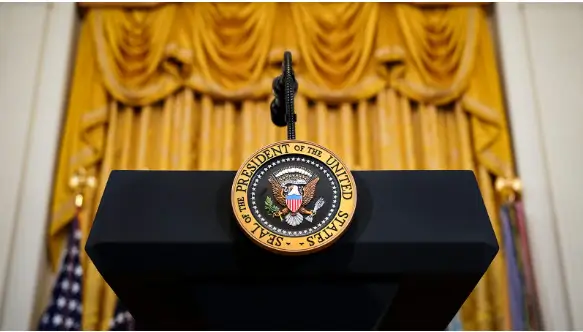
Since the assassination of President McKinley in 1901, the organization tasked with protecting the life of the POTUS is the Secret Service.
You might be familiar with images of sunglass- and suit-clad Secret Service agents escorting the presidential motorcade of heavily armored, black limousines, which are reinforced with the president’s bulletproof glass and other ballistic-grade materials.
In the event that a threat slips past the watchful gaze of the Secret Service, these bullet-resistant materials continue to physically protect the president.
However, the president wasn’t always so protected by bulletproof glass, which meant the Secret Service was both the first and last line of defense against threats.
In fact, the original motorcades that presidents traveled in, alongside Secret Service agents, consisted of horses and carriages — there was nothing to be seen of bullet-resistant presidential protection in the early 1900s.
As the automobile gradually replaced horse and carriage as the preferred mode of transport, the POTUS and his cohort naturally began to travel in top-of-the-line vehicles.
However, it wasn’t until the United States got involved in the Second World War that the Secret Service began to implement bulletproof glass in the president’s protective net.
In 1941, President Roosevelt became the first president to employ the use of an armored car, when he started riding in an armored limo that the Treasury Department had seized from notorious mobster Al Capone.
Since bullet-resistant security technology was relatively new at the time, the vehicle’s only ballistic-grade materials were its windows — the body did not contain any kind of bullet-resistant panels.
While presidents continued to ride around in various versions of armored cars and limousines in the decades between Roosevelt’s and Kennedy’s presidencies, these vehicles were often open topped.
No matter how much armor a vehicle has, an open-topped vehicle does nothing to protect the riders from snipers in high positions. This is a fact that the world was made tragically aware of on November 22, 1963, when Lee Harvey Oswald shot and killed President Kennedy as he was sitting in the back of his 1961 Lincoln Continental limousine.
This was the last time a US president would travel without full ballistic-grade protection surrounding them in their motorcade vehicle.
After Kennedy’s assassination, the presidential limo was given a full ballistic-grade retrofit. It weighed a whopping one ton more than the original when it was returned to the Secret Service after the armor and security glazing retrofit.
In 1987, the world watched President Reagan give his infamous Berlin Wall speech from behind two very chunky sheets of bullet-resistant glass. These panels were intended to protect the president from any assassination attempts as he stood just 100 yards from the Berlin Wall and called for it to be torn down.
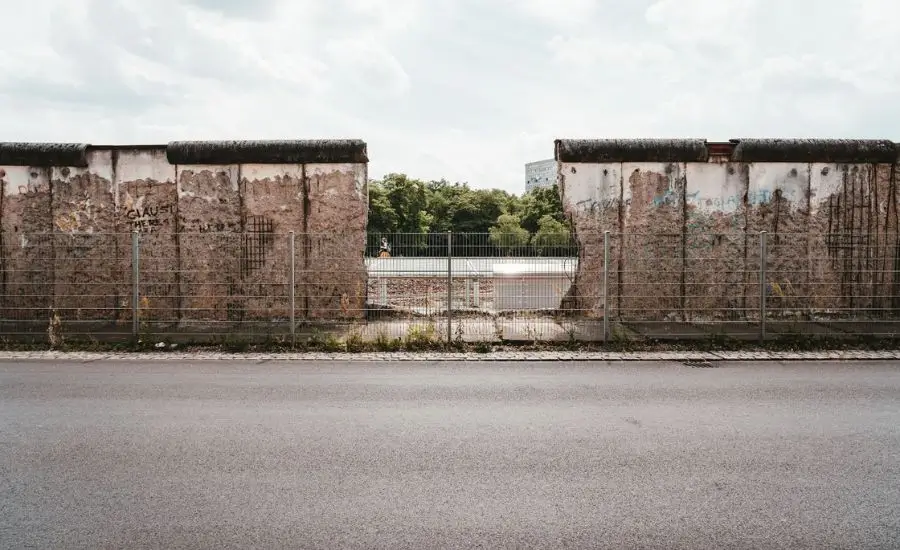
While presidents had been protected by bullet-resistant glass at inaugurations in past years, Clinton’s inauguration in 1993 is when we can see it taking on the modern form that we see today. President Clinton watched the inaugural parade, was sworn into office, and delivered his inaugural address all from behind presidential bulletproof glass.
If you look back at pictures and footage of Obama’s inauguration, you can see that he is protected by the same type of glazing that we saw used in the 90s. This goes to show that the president and bulletproof glass have become inseparable at public appearances where the threat of a ballistic attack is high.
These days, whether a president is getting inaugurated, traveling in their motorcade, or giving a speech abroad, they are almost always protected by bullet-resistant security glazing.

To conclude our look at the history of the president and bulletproof glass, it’s important to note that, although the president is surely protected by the most bullet-resistant security glass available today, no ballistic-grade glazing can be 100% bulletproof. A high enough volume of high-caliber rounds can eventually penetrate any type of bullet-resistant glass.
Additionally, unless the president is completely enveloped in bullet-resistant glazing, there’s always a chance that an attacker can find a gap in the president’s bulletproof glass. This is why a multi-layered approach to security that involves the Secret Service, presidential bulletproof glass, and other measures, is required to ensure the safety of the POTUS.
For security reasons, it’s impossible to find out what the exact composition of the bulletproof presidential security glazing is. However, we can say with a fair degree of confidence that it is made out of some type of glass-clad polycarbonate material.
Glass-clad polycarbonate is composed of a combination of laminated security glass on the attack side (the outside) and polycarbonate-based plastic on the safe side (the inside).
This unique composition provides the highest level of ballistic protection you can achieve with any combination of materials today, while still allowing the panels to look, feel, and function like traditional glass.
Presidential protection aside, bullet-resistant glass-clad polycarbonate is intended to resist bullets, blasts, and forced entry, and is suitable for a wide range of commercial security applications.
The same type of ballistic-grade glazing used by the president can also:
It’s certainly interesting to take a look back in time and see how far we’ve come in terms of ballistic-grade protection of property and people. Looking at the history of the president and bulletproof glass gives us a prime example of the evolution of bullet-resistant glazing and its applications.
Indeed, it’s hard to even imagine that there was once a time when individuals as important as the president would travel or give public speeches without being surrounded by at least some ballistic-grade security glazing!
This is especially true since the same type of bullet-resistant security glazing used by the president and other high-profile individuals is now affordable and accessible for businesses and commercial buildings of all shapes and sizes.
If you’re looking for the highest level of ballistic-grade glass protection to secure your property against active threats, forced entry, and more, contact Riot Glass today for a complimentary consultation.
School emergency lockdown plans are a vital part of keeping students and faculty safe during campus emergency situations.
Due to recent events and a steady rise in school violence over the last few years, many schools are taking a second look at their lockdown procedures to see how they can improve them.
Having a better understanding of how different types of school lockdown plans work and what their best practices are can help ensure the safety and security of students and staff during emergencies on or near school property.
In general, school emergency lockdown plans fall into one of three categories:
Shelter-in-place lockdowns are usually caused by a natural disaster or some type of hazard related to extreme weather or environmental threats.
For example, this type of school lockdown can occur if there is a high level of air pollution due to a nearby fire or if there is an unexpected storm warning.
The goal of a shelter-in-place lockdown is to keep students and faculty safe by keeping them indoors while the environmental event passes.
During the lockdown, students and their teachers typically make their way to pre-designated lockdown rooms where they have access to bathrooms, emergency supplies, and all other necessities.
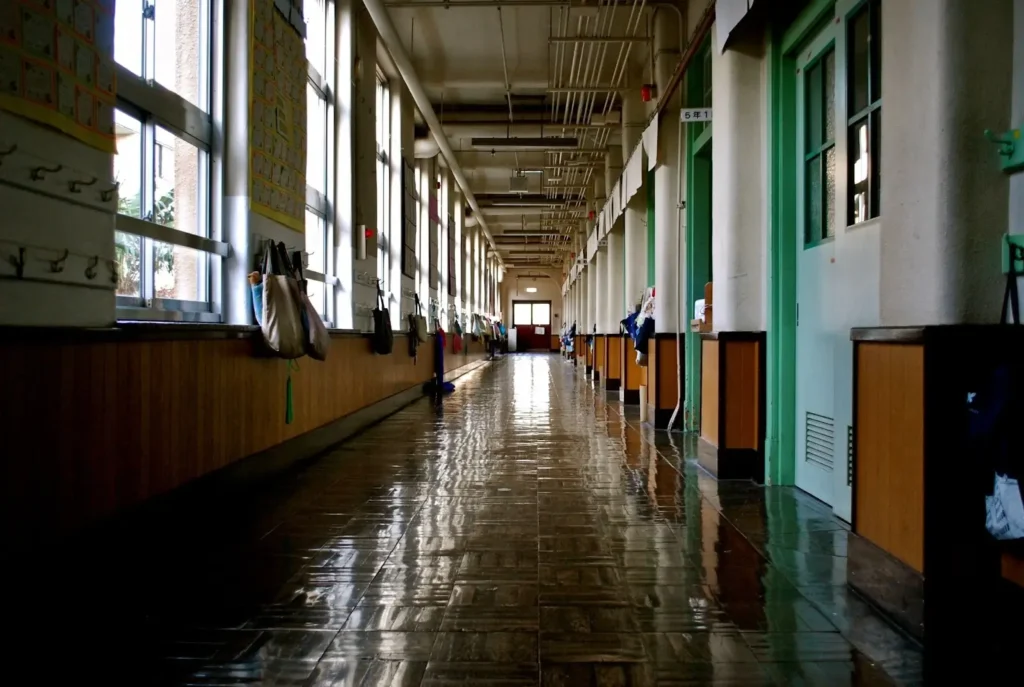
An internal threat lockdown plan addresses potential active threats that are already inside a school.
An active shooter inside the building or a bomb threat about an explosive device in the school are examples of internal threats that can cause this type of lockdown.
The goal of an internal threat school lockdown plan is to keep students and staff safe until the threat is removed from campus.
Depending on the nature of the internal threat, the lockdown response can vary. For example, if there is an active shooter inside a school, teachers and students should lock down inside secure classrooms until the authorities arrive and neutralize the threat.
On the other hand, if there is a threat about a bomb in the building, the lockdown procedure should be to get everyone out of the building as fast as possible and move them to a safe location, then lock the building down until the authorities arrive and deal with the threat.

An external threat is a threat that’s somewhere outside a school, either on school grounds or nearby, that calls for a school lockdown.
Examples of external threats include a dangerous animal spotted nearby, an active shooter outside the school, a nearby police response to some type of incident, or civil unrest in the vicinity.
The goal of an external threat lockdown is to prevent the threat from entering the building. This type of lockdown is sometimes also referred to as a lockout.
Again, depending on the nature and severity of the external threat, this type of school lockdown plan may look a little different.
For example, if there’s an active shooter outside the school, students and teachers should run, hide, and barricade themselves somewhere secure inside until the police arrive and neutralize the threat.
If the external threat is a dangerous animal, such as a cougar, spotted nearby, access to the school will be restricted, but students and teachers may be free to move around inside the facility as needed until the animal is caught or moves on.
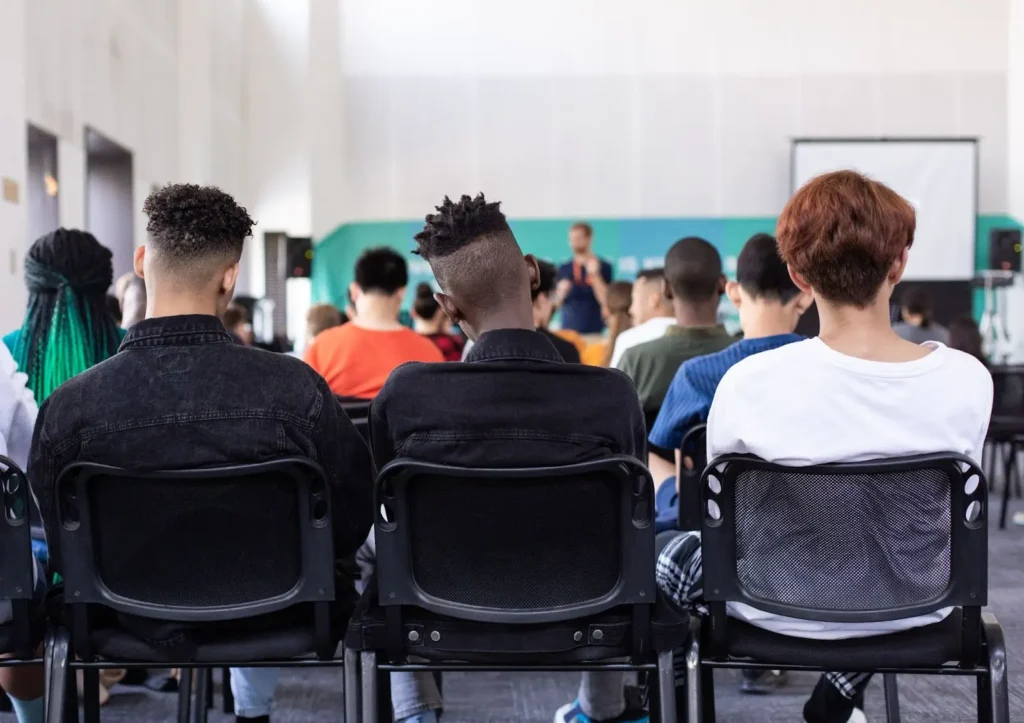
School emergency lockdown plans can also be categorized as either soft or hard lockdowns.
A soft lockdown happens when the threat is not immediate, and is typically due to an external threat. The example we used above of a dangerous wild animal nearby would call for a soft lockdown.
In a soft lockdown, students and teachers may move around inside the school, but people are not allowed to go in or out of buildings.
A hard lockdown happens when there is an immediate threat to the safety of students and staff, such as an active shooter or a weapon or drug paraphernalia found on campus.
In a hard lockdown, students and teachers usually lock down inside classrooms and wait until the threat is removed by the authorities. All doors should remain locked and it may be necessary to avoid doors and windows, especially in the case of an active threat.
Preparing a school emergency lockdown plan for every possible emergency scenario may seem like a daunting task, but there are some best practices you can follow to make lockdowns go more smoothly and keep students and staff safe and secure.
Creating comprehensive school emergency lockdown plans for all the possible threats that can arise is a critical part of keeping students and school personnel safe during emergency scenarios.
But planning only goes so far, which is why your school should also have the right physical security technology in place to protect the lives of students and faculty.
Riot Glass, LLC is an industry leader in school security glazing that keeps the bad guys out of school buildings and classrooms, as well as protects against mother nature.
Contact us today for a free consultation or to schedule a professional threat assessment to help with your school lockdown planning.
In the face of tragic active threat incidents at schools across the United States in recent years, states have begun to implement glass hardening mandates for schools. These mandates require schools to reinforce their window and door glass to better protect students and staff against security threats.
While only a couple of states have put school glass hardening mandates in place so far, this trend reflects a growing awareness of how different types of security glazing products can harden schools’ security and improve the safety of students and staff in American educational institutions.
As of August 2023, Texas has mandated that all K-12 schools install security window film on glass doors and windows. This requirement, a significant step towards boosting safety and security in schools, is part of the state’s wider response to the tragic Uvalde shooting, which occurred in 2022 and brought major school security measures to light.
The Texas school glass hardening mandate, put into place by the Texas Education Agency (TEA), specifies that all ground-level glass doors and windows large enough to allow entry if broken must be reinforced with forced entry-resistant security window film (unless they’re located in a secure, non-accessible area).
To help schools and districts comply with the new regulations, the state of Texas has allocated $400 million to school security grant funds. These funds are available to support schools in upgrading their window and door security, as well as implementing other safety and security measures.
Following the glass hardening mandate for Texas schools, new legislation in the state of Tennessee mandates the installation of forced entry-resistant safety and security window film on all exterior windows and doors in school buildings constructed or remodeled after July 1, 2023.
The law, signed into effect on May 10, 2023, is part of a larger $230 million initiative to enhance school safety across the state. The budget also includes funding for school resource officers and Homeland Security agents in every county. This move follows the tragic 2023 shooting at the Covenant School in Nashville.
While Texas and Tennessee are leading the charge when it comes to mandating glass hardening in schools, other states are also exploring similar security enhancements.
The increasing frequency of active threat incidents in schools has prompted other states, like Missouri, to consider legislation requiring bullet-resistant doors and glazing for all ground-floor entryways and windows in schools.
This trend suggests that more states may soon follow suit, perhaps one day even making security glazing a standard requirement in schools nationwide.
One of the primary challenges in implementing glass hardening mandates in schools is the cost. School districts have notoriously tight budgets, and currently only a small percentage of schools have security glazing materials in place due to budget constraints.
However, the availability of state funding, as seen in Texas, has the potential to help mitigate these financial barriers and ensure that more schools can meet the new safety and security standards.
An additional consideration is the effectiveness of the required security glazing. While mandating security window film in schools is a positive step towards hardening their security, it’s important to understand that this type of film can only delay forced entry, rather than prevent it altogether.
For higher levels of access denial and active threat mitigation, schools should set their sights on forced entry-resistant or ballistic-grade security glazing, which can be retrofitted over their existing doors and windows to create virtually unbreakable barriers to forced entry.
As active threats continue to pose a significant threat to schools, states are increasingly looking at school glass hardening mandates as a way to protect students and staff during such incidents. Texas and Tennessee have already implemented such measures, and other states may soon follow.
These new regulations highlight the importance of adopting proactive security measures in schools, and they signal a shift toward more robust protection strategies in the face of modern threats.
While cost remains a challenge for many school districts, the availability of state funding in the form of grants can potentially help schools harden their glass security.
With the growing awareness of issues related to school safety and security, these types of mandates are likely going to become a more integral part of the broader, ongoing effort to secure educational institutions across the country.
Riot Glass is dedicated to helping schools harden their windows and doors to mitigate active threats and protect the lives of students, faculty, and visitors. Contact us today for more information about our school security glazing options.