
If you’re a member of the AIA (American Institute of Architects), you may be wondering what the Continuing Education Unit (CEU) requirements are for 2024. With only a few months left in the year, now’s the time to ensure you understand what they are and make up any credits you’re missing!
As with past years, AIA members are required to complete 18 Learning Units (LUs) of continuing education in 2024. Of these, at least 12 LUs must be in Health, Safety, and Welfare (HSW) topics. One hour of continuing education equals one LU.
New members or those who upgraded from Associate status within the year are exempt from these requirements for that calendar year, starting their requirements on January 1 of the following year.
Additionally, Associate and Allied members are encouraged but not required to complete these continuing education requirements, while Emeritus Architect members must complete 1 LU annually.
Failure to meet these requirements by December 31 each year results in non-compliance, but members are given a nine-month grace period until September 30 of the following year to complete and report their required credits. If credits are earned during this period, they will apply to the previous year's deficit.
Note that these requirements apply to all AIA members, regardless of their location.
For those AIA members who haven't completed their credits yet or need to make up for credits missing from the past year, consider taking the Riot Glass course, “Fenestration Security for Educational, Religious, Commercial, and Retail Applications.”
This 1.5-hour course examines fenestration security risks, considerations, and solutions for various applications, along with applicable performance testing and standards. It provides an in-depth discussion on new and retrofit access-denial glazing systems that offer maximum protection against forced entry and ballistic threats.
By completing this course, you can earn 1.5 LUs towards your AIA CEU requirements, ensuring you stay compliant and bulking up your knowledge on modern security glass topics as applied to commercial architecture and security design!
Forced entry, rioting and looting, active threats — these are all major dangers to high-risk buildings, including certain types of commercial, government, and military facilities.
Installing forced entry-resistant doors and windows can help mitigate these threats, but it’s important to understand the capabilities and limitations of the many different types of forced entry resistance ratings and testing standards out there.
One of the most robust forced entry resistance tests is the ASTM F3038 standard, which outlines the test method for evaluating the forced-entry resistance of building components and security systems.
Understanding exactly what passing the ASTM F3038 forced entry test means can help building owners, managers, and security professionals evaluate when using materials with this certification might be justified.
The ASTM F3038-21 is officially a “Standard Test Method for Timed Evaluation of Forced-Entry-Resistant Systems.” In other words, it is a method designed to evaluate how well building components can withstand forced entry attempts within a specified time frame.
Note that the number at the end of the test’s full name, the “21,” indicates how recently the testing standards were updated. In this case, it means that they were updated in 2021.
This test is crucial for assessing the forced-entry resistance characteristics of materials intended to protect against unauthorized entry in high-risk commercial buildings and facilities.
The F3038 test assesses the effectiveness of various tools and devices that might be used in an attempt to forcibly enter a structure. The range of tools considered can vary, but they generally include readily available hand tools, simulating a spontaneous mob scenario.
The test also takes into account the number of individuals attempting to breach the structure. This variable is critical, as it affects the complexity, duration, and overall intensity of the forced entry attempt.
Lastly, the F3038 test evaluates the sophistication level of the attack, including the techniques and methods employed by the aggressors. This aspect is crucial to understanding the real-world applicability of the test results.
The F3038 standard is not intended to guarantee absolute prevention of forced entry, but provides a reliable measure to evaluate the time it takes to create an opening sufficient for an intruder to gain access. The standard is particularly significant for:
The scope of ASTM F3038-21 forced entry testing encompasses a broad range of building components and security products, including but not limited to:
The systems must be tested as complete units in a test frame or under field conditions to accurately simulate real-world scenarios. For instance, security window framing and glazing must be tested in a test frame that simulates how it would be installed in a real-life building.
For a product to receive a rating, all portions of the tested specimen must meet or exceed the specified test level. This ensures uniform protection across the entire component.
Once a system is tested and deemed to satisfy the requirements, no design changes can be made without a retest. This ensures that the integrity and resistance of the system remain consistent.
Materials and systems meeting the ASTM F3038-21 forced entry testing standard are widely used by various government agencies and other high-security institutions. These include high-security government buildings, embassies, and military installations.
Additionally, the US State Department has specific standards for forced entry resistance that align closely with ASTM F3038-21.
Other organizations, such as hospitals, schools, and commercial entities, may also utilize these materials to improve their security measures and protect against forced entry, especially during civil unrest or active threat scenarios.
There are many forced entry resistance tests out there that can be used to certify commercial windows and doors for use in high-risk applications, but the ASTM F3038 is one of the most rigorous and effective.
By implementing security framing, sub-framing, or glazing that has passed a F3038 forced entry test, building owners, managers, and security professionals can rest assured that their facility’s most vulnerable potential entry points are highly secured against unauthorized access.
Contact Riot Glass today for more information on how we can help you secure your property against forced entry, civil unrest, and active threats using our retrofit fenestration security solutions.
Historic buildings, with their heritage architecture and important cultural significance, are often highly valued landmarks that are carefully preserved for future generations to enjoy and benefit from.
However, these historic structures must also be carefully modernized to improve their performance with the times, including updating their security measures to protect against modern security risks, like active threats.
Naturally, one of the most effective measures to protect against active threats is bullet-resistant security glazing, but using bulletproof glass for historic buildings is easier said than done.
Heritage buildings typically have to adhere to strict preservation guidelines, which specify what and how specific elements of their architecture can be modified. Among these, there are often rules related specifically to windows and doors.
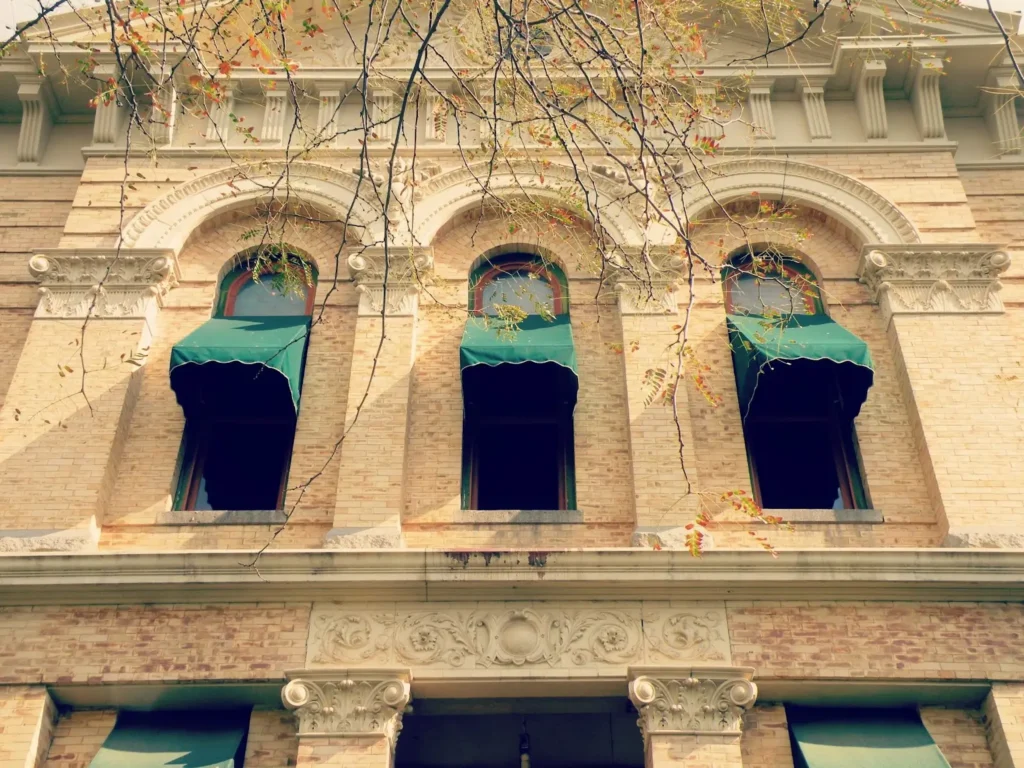
One of the most significant challenges in retrofitting historic buildings with bulletproof glass is preserving their architectural integrity.
Whether or not a historic building is protected by strict preservation guidelines, preserving its heritage architecture is still a top concern that can make security upgrades more difficult.
Installing modern security features like bullet-resistant glass can potentially alter the building's original appearance and damage its existing structure, detracting from its historical value.
Historic buildings are subject to numerous local, state, and federal regulations aimed at preserving their historical and architectural significance.
These regulations often limit the type of modifications that can be made, especially to visible elements, such as windows and doors.
Ensuring compliance with these regulations while upgrading security measures can be a complex and time-consuming process.
Many historic buildings were constructed using older materials and techniques that create structural limitations when attempting to install modern security glass.
For example, the existing window frames and supporting structures may not be able to accommodate the additional weight and thickness of bullet-resistant glass without significant modifications.
However, due to preservation concerns, making such modifications may not be permitted or desirable, complicating matters further.
Maintaining the aesthetic appeal of historic buildings is crucial, and bullet-resistant glass retrofits that do not blend seamlessly with the original architecture can be unsightly, subtracting from the building's historical charm.
Striking a perfect balance between modern security needs and aesthetic preservation is a central challenge when it comes to using bulletproof glass for historic buildings.
The unique architectural features of historic buildings often limit the available options for retrofitting security measures.
For instance, standard out-of-the-box security glass solutions may not be suitable for the specific dimensions and architectural details of historic windows, necessitating custom solutions that can accommodate these constraints.

Despite the many challenges, it is possible to retrofit historic buildings with bullet-resistant glass while preserving their architectural integrity.
Innovative solutions, like the Riot Glass J Series, offer a way to harden historic buildings’ security without compromising on their historical value. Here’s how the J Series works:
The Riot Glass J Series uses a patented compression-fit sub-framing system that allows for the installation of ballistic-grade security glazing without the need for invasive modifications.
Unlike traditional methods that require drilling or other destructive techniques, the J Series sub-framing can be gently mounted into the existing window structure, preserving the original architecture.
The Riot Glass J Series is highly customizable, allowing for a perfect fit regardless of the specific dimensions and features of the building's windows.
This ensures that the bullet-resistant security glazing integrates seamlessly with the existing structure, maintaining the building's aesthetic appeal.
The non-invasive nature of the Riot Glass J Series helps ensure compliance with preservation guidelines and regulations.
By avoiding drilling and other permanent modifications to the building's structure, this solution aligns with the requirements of preservation authorities, making it easier to obtain the necessary approvals for retrofitting historic buildings with bulletproof glass.
The Riot Glass J Series provides a robust foundation for installing different types of ballistic-grade security glazing.
This system meets the stringent ASTM F3038 forced entry testing requirements, ensuring that windows can withstand a 15-minute forced entry attempt by multiple attackers using readily available tools and objects.
This level of security is crucial for protecting historic buildings from modern threats, such as mobs of armed attackers during incidents of civil unrest.
Another significant advantage of the Riot Glass J Series is its ability to be removed without leaving any trace.
If security needs or regulatory requirements change in the future, the sub-framing can be dismantled without damaging the original structure.
To illustrate the effectiveness of the Riot Glass J Series in retrofitting historic buildings with bulletproof glass, let's consider the example of a historic courthouse.
Let’s say that you have a courthouse Built in the early 1900s, and it is now a landmark with significant architectural and historical value. The building's original windows, with their ornate wooden frames and antique glass details, are protected under local preservation laws.
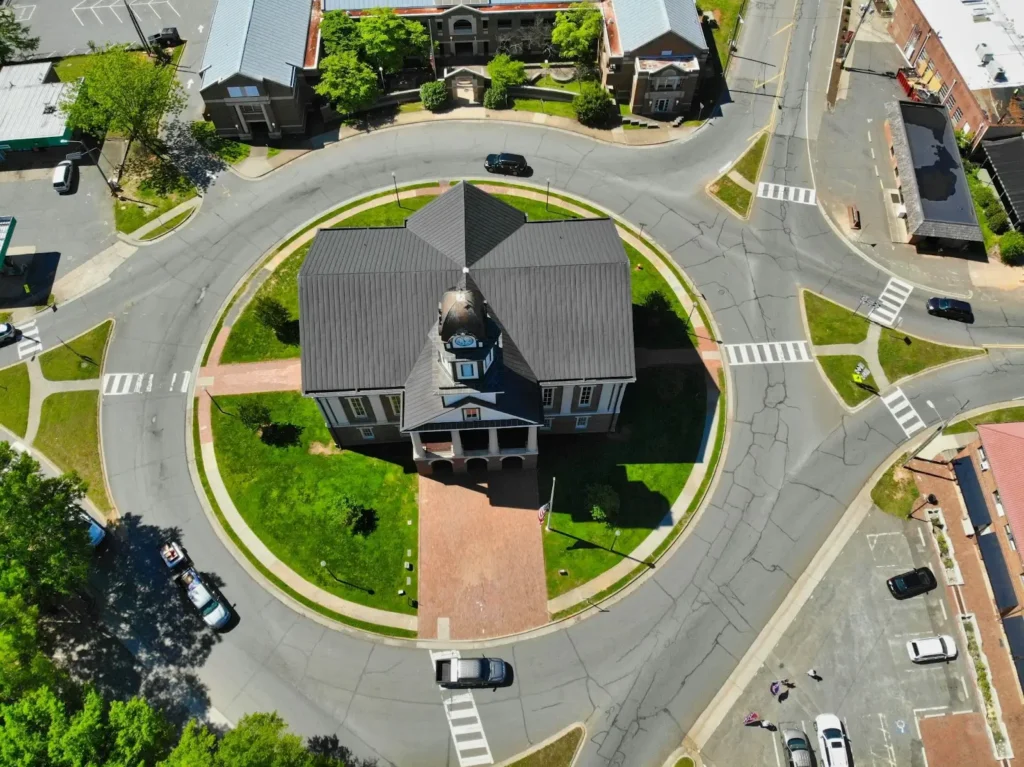
The courthouse needs increased security measures to protect against potential threats, including rioting, forced entry, and active threats, but any modifications have to comply with preservation guidelines and maintain the building's aesthetic integrity.
The Riot Glass J Series is selected for its non-invasive installation and custom-fit capabilities. The compression-fit sub-framing is tailored to the unique dimensions and features of the courthouse windows, allowing for the seamless integration of bullet-resistant glass without altering the original wooden frames or glass details.
The installation of Riot Glass J Series sub-framing and bullet-resistant glazing significantly improve the courthouse's security while preserving its historical and architectural value. The project is completed in compliance with preservation guidelines, and the building's aesthetic appeal remains intact. The non-invasive installation process also ensures that the courthouse can be restored to its original state if needed in the future.
Need to harden a historic building with bullet-resistant security glazing? Contact us for help!
When it comes to securing high-end retail stores, protecting valuable merchandise from burglary and smash-and-grab theft are top concerns.
While traditional components of commercial security systems, including cameras and alarms, are important to have, they do nothing to physically prevent burglars, smash-and-grab thieves, or rioters and looters from breaking a storefront window or display case and making off with thousands of dollars worth of luxury retail items.
In fact, over the last few years, we’ve seen a rise in the number of brazen, large-scale smash-and-grab robberies known as “flash robs,” in which large groups of perpetrators carry out a smash-and-grab in broad daylight, right in front of employees, onlookers, and even security guards.
In order to prevent such incidents, along with burglary and looting, luxury retailers must create physical barriers to forced entry.
The best way to do this is to reinforce storefront windows, entryway doors, and display cases with anti-theft glass, so would-be intruders can’t take advantage of these vulnerable points to gain quick access to expensive merchandise.
To cost-effectively secure high-end retail stores against theft, we recommend containment-grade ArmorPlast AP25 glazing shields, which can be retrofitted to protect your existing glass against forced entry, burglary, smash-and-grab theft, and more.
ArmorPlast AP25 is non-glass security glazing that offers the virtually unbreakable strength of polycarbonate along with a glass-like surface hardness and appearance.
AP25 can be retrofitted over a retailer’s storefront glass, protecting the existing commercial glass from breaking. It can also be used to create smash-and-grab-proof display cases.
Because of its virtually unbreakable composition, would-be intruders can hit AP25 with common burglary tools like bats, sledgehammers, and crowbars all they want — it’s not going to give way or allow them to pass an arm through to open a door from the inside.
These glazing shields secure high-end retail stores 24/7 against a full range of threats, even acting as an alternative to board ups and roll-down security shutters during incidents of civil unrest.
Although AP25 is non-ballistic, meaning it can’t stop bullets, it will retain its integrity and remain a barrier to forced entry even if penetrated during a ballistic attack.
While the primary use of AP25 is to prevent forced entry, this level of access denial means that a secondary benefit is active threat protection, resulting in an extremely high level of security for luxury and high-risk retailers that can’t be attained using other security glazing products.

The number one way that burglars and smash-and-grab thieves gain entry to retail stores is by smashing their way through a glass window or door.
An experienced burglar or smash-and-grab thief knows exactly which doors and windows are most vulnerable and can make quick work of standard storefront glass, which is usually tempered glass.
All it takes is a blow or two from a sledgehammer (one of the most popular burglary tools these days) or a well-aimed chuck of a brick or even a piece of porcelain to make a tempered glass storefront window crumble.
ArmorPlast AP25 will keep your retail store’s tempered glass intact even in the face of determined forced entry attempts by would-be burglars, causing them to move on or delaying them long enough for the authorities to arrive if they trigger an alarm system.
On the other hand, smash-and-grab theft also commonly occurs as a crime of opportunity, both as a daily occurrence and during incidents of civil unrest and rioting.
Maybe someone is walking by and sees an expensive item in the window of your store, so they pick up a rock or brick, smash the storefront glass, and grab the item. Maybe there is civil unrest taking place and criminals are taking advantage of the chaos to break into high-end stores and steal expensive merchandise.
Either way, AP25 keeps the criminals out, protecting your storefront from such types of retail theft around the clock.
If you’re concerned about a possible ballistic attack directly against or in the vicinity of your high-end retail store, ArmorPlast AP25 can protect the people inside by preventing the attackers from gaining entry.
As we mentioned earlier, AP25 is non-ballistic, but even if it gets riddled with bullets it remains a formidable barrier to forced entry.
Alternatively, if you run a high-risk retail store and are concerned about the potential for armed robbery involving firearms, you might choose to install ballistic-grade ArmorPlast security glazing. These bullet-resistant glazing shields can resist impacts from a variety of different ballistic weapons, including high-caliber handguns and multi-shot firearms.
A luxury retail store might also choose to install bullet-resistant ArmorPlast shields simply because they offer the highest level of protection against all kinds of impacts, or perhaps because the store is located in a high-traffic downtown core that could potentially be the target of an active threat looking to cause random casualties.
In the case of an active threat, store employees could lock down the store and stay safe inside while authorities arrive to deal with the situation.
Not all threats to a retail store’s security are man-made ones. Storms and natural disasters also pose a threat, especially in hurricane zones and the southeastern states. Fortunately, ArmorPlast also secures high-end retail stores against these types of threats from mother nature.
ArmorPlast can prevent your storefront glass from shattering and breaking inwards when impacted by flying storm debris. It can also protect the glass and keep your storefront intact to mitigate further damage during storms that can arise from heavy rains and flooding.
This allows you and your employees to stay out of harm’s way while you wait for a storm or another natural disaster to settle down — you don’t have to worry about the condition of your storefront windows and doors and wonder whether your store’s security has been compromised.
Not only that, but ArmorPlast’s proprietary exterior coating is resistant to marring and easy to clean, so you can get your storefront back to normal quickly after a natural disaster.
ArmorPlast AP25 containment-grade glazing shields are one of the most cost-effective solutions when it comes to securing high-end retail stores against a full range of threats.
While primarily designed to prevent forced entry, burglary, smash-and-grab theft, and looting, ArmorPlast can also protect luxury retail stores and their occupants against active threats, storm damage, and other impacts.
The affordability and ease of installation should put ArmorPlast on any premium retail store owner’s radar when looking for ways to improve store security without significantly altering storefront windows, doors, or display cases.
Contact us today for more information about securing your retail store with ArmorPlast!